If you run a business that serves customers in a specific city or region, like Dubai, Abu Dhabi, or Sharjah local SEO is one of the highest-ROI marketing activities you can do. This guide walks you through everything you need to know to rank locally, attract nearby customers, and grow your business using proven local SEO strategies.
What Is Local SEO and Why It Matters
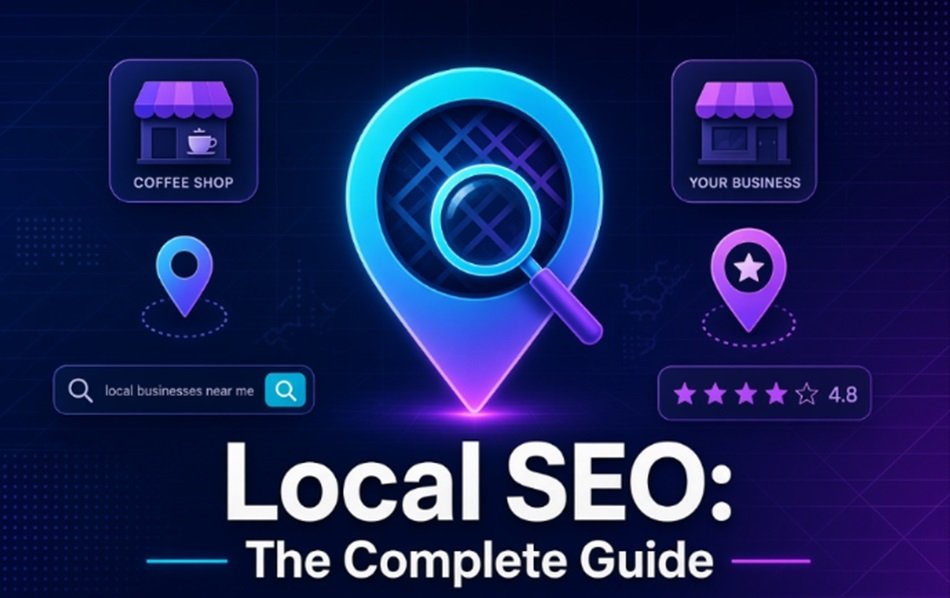
Local SEO is the practice of optimizing your online presence so your business appears when people nearby search for your products or services. For example, when someone in Dubai searches for “plumber near me” or “best cafe in Abu Dhabi,” local SEO helps your business show up in the map pack and local organic results.
Local SEO vs. Traditional SEO
Traditional SEO targets a broad, often national or global audience. Local SEO, by contrast, focuses on a specific geographic area and emphasizes signals like your Google Business Profile, local citations, reviews, and location-specific content.
Think of it this way:
– Traditional SEO: “How to fix a leaking tap”
– Local SEO: “Emergency plumber in Dubai Marina”
Both matter, but if your revenue depends on nearby customers, local SEO should be your priority.
How Local Search Results Work
Google shows two main types of results for local queries:
- Map pack (local pack): The box with a map and three business listings that appears at or near the top of the results.
2. Local organic results: The traditional “blue link” listings below the map pack that lead to websites.
You canand shouldoptimize for both. Map pack rankings depend heavily on your Google Business Profile, proximity, and reviews. Organic local rankings rely more on on-page SEO, content, and backlinks, but still benefit from strong local signals.
How to Do Local SEO: A Step-by-Step Framework
Ranking locally isn’t about one magic trick. It’s about consistently executing a set of proven tactics. Below is a practical, step-by-step framework you can follow to improve your local SEO and rank locally in the UAE.
1. Claim and Optimize Your Google Business Profile
Your Google Business Profile (GBP) is the single most important asset for local SEO. Without a complete, accurate GBP, you’re effectively invisible in the map pack.
Do this first:
– Claim and verify your profile: If you haven’t already, claim your business on Google and complete the verification process.
– Use your exact business name: Don’t add keywords or locations to your name unless they’re part of your legal business name.
– Choose the right categories: Select the most accurate primary category, then add relevant secondary categories to expand your keyword coverage.
– Complete every section: Fill out your address (or service area), phone number, website, hours, products, services, and business description.
– Add high-quality photos: Upload clear images of your storefront, team, products, and services.
– Keep information up to date: Update holiday hours, special hours, and any changes to your services or contact details.
For UAE businesses, consider adding both English and Arabic descriptions where appropriate, especially if you serve a bilingual audience.
2. Get More (and Better) Customer Reviews
Reviews are a major local ranking factorand a trust signal for potential customers. Google looks at the quantity, quality, and recency of reviews when deciding map pack rankings.
How to get more reviews:
– Ask consistently: Make review requests part of your post-purchase or post-service workflow.
– Time it right: Ask when the customer is happiestright after a successful job, delivery, or positive interaction.
– Make it easy: Send a direct link to your Google review form via email, WhatsApp, or SMS.
– Be specific: Instead of “Leave us a review,” try “Could you share a quick Google review about your experience with our [service] in [location]?”
Respond to every review:
– Thank customers for positive reviews.
– Address negative reviews professionally, acknowledge the issue, and offer to resolve it offline.
In the UAE, many customers rely heavily on reviews before choosing a local business, so a strong review profile can significantly impact your conversions.
3. Build Consistent NAP Citations
A NAP citation is any online mention of your business’s Name, Address, and Phone number. Consistent NAP data across directories and listings helps Google trust that your business is real and located where you say it is.
Key steps:
– Audit your current citations: Search for your business name and check major directories (Google, Apple Maps, Bing Places, Yelp, Yellow Pages, industry-specific sites).
– Fix inconsistencies: Ensure your NAP is identical everywheresame spelling, abbreviations, and phone format.
– Submit to relevant directories: Focus on high-authority and local UAE directories, plus industry-specific platforms.
For UAE businesses, also consider local platforms like:
– Industry-specific directories (e.g., construction, healthcare, hospitality)
– Local business associations and chamber of commerce listings
– Regional platforms that serve the Gulf market
4. Do Local Keyword Research
Local keyword research helps you understand exactly how nearby customers search for your services.
Start with these steps:
List your core services: Write down every service or product you offer.
Add location modifiers: Combine services with locations you serve (e.g., “AC repair Dubai,” “dentist in Abu Dhabi,” “moving company Sharjah”).
Check search intent: Google your target keywords and see if a map pack or local results appear. If they do, the query has local intent.
Prioritize by relevance and volume: Focus on keywords that are both relevant to your business and show decent search demand.
Use tools like Google Keyword Planner, Semrush, or Ahrefs to expand your list and validate search volumes. For UAE businesses, consider both English and Arabic keyword variations where appropriate.
5. Improve On-Page SEO for Local Rankings
On-page SEO tells Google what your pages are about and where you operate. Strong on-page signals help you rank in local organic results and support your map pack performance.
On-page checklist:
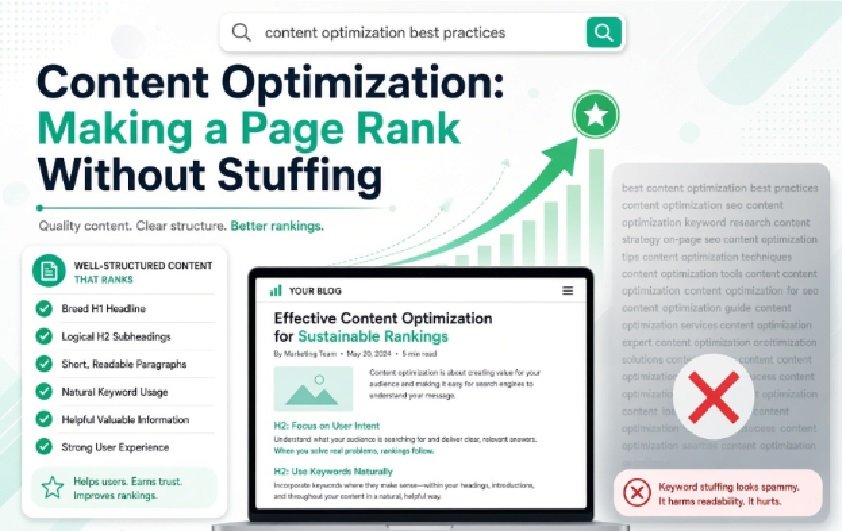
– Include local keywords naturally: Use your primary local keyword (e.g., “local SEO Dubai”) in your title tag, H1, meta description, URL, and body contentwithout stuffing.
– Add NAP to your site: Display your business name, address, and phone number prominently, ideally in the header or footer.
– Write compelling meta titles and descriptions: Include your primary keyword and location, and make them click-worthy.
– Use descriptive, SEO-friendly URLs: Keep URLs short and include your main keyword (e.g., /local-seo-guide).
– Optimize images: Use descriptive file names and alt text that include relevant keywords where natural.
– Internally link strategically: Link from your homepage and service pages to location pages and related content.
For UAE businesses, ensure your site is mobile-friendly and fastmany local searches happen on phones.
6. Create Location Pages (If You Serve Multiple Areas)
If you serve multiple cities or neighborhoods (e.g., Dubai, Abu Dhabi, Sharjah), create dedicated location pages for each area. These pages help you rank for location-specific queries and give Google clear signals about where you operate.
Each location page should include:
– Unique, location-specific content (don’t just swap city names)
– Local keywords (e.g., “local SEO services in Abu Dhabi”)
– Your NAP for that location (if applicable)
– Testimonials or case studies from customers in that area
– A clear call-to-action (call, form, WhatsApp, etc.)
Avoid thin, duplicate content. Each page should offer genuine value to someone searching in that location.
7. Earn Local Backlinks
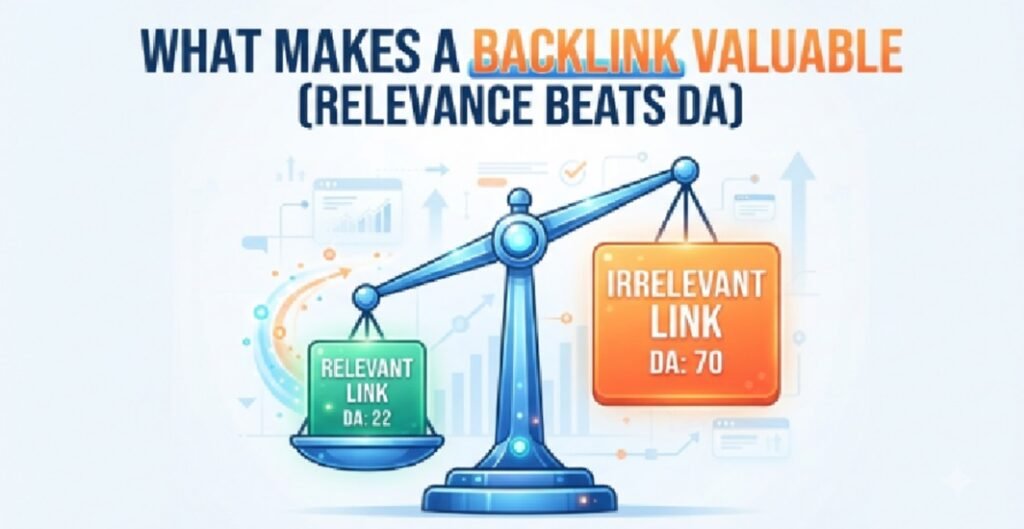
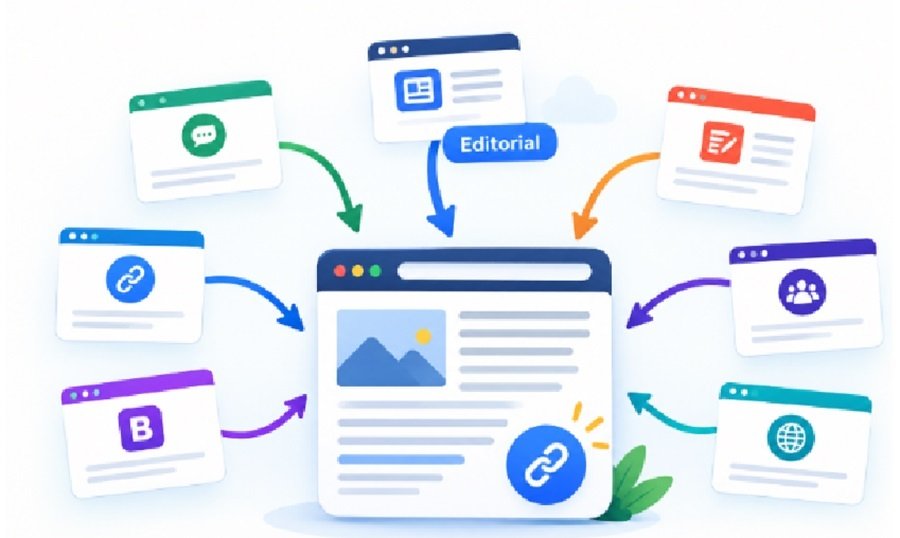
Backlinks remain a critical ranking factor for local organic results. Local backlinks from other businesses, news sites, and community organizations in your area are especially powerful.
Practical ways to earn local links:
– Partner with local businesses: Ask suppliers, partners, or complementary businesses to link to you from their “Partners” or “Resources” pages.
– Join your local chamber of commerce: Membership often includes a listing with a backlink.
– Sponsor local events: Sponsorships often come with a mention and link on the event website.
– Pitch local media: Share newsworthy stories (grand openings, milestones, community initiatives) with local news outlets and blogs.
– Create link-worthy local content: Publish guides, reports, or resources that local organizations and bloggers want to reference.
In the UAE, consider Arabic-language publications, industry portals, and local business directories as potential link sources.
8. Add LocalBusiness Schema to Your Website
Schema markup (structured data) helps search engines understand your business details. Adding LocalBusiness schema can improve how your information appears in search and supports AI-driven results.
At minimum, your schema should include:
Business name
Address
Phone number
Website URL
Opening hours
Geo coordinates (if available)
Business type (e.g., LocalBusiness, Dentist, Restaurant)
You can add schema via your CMS, a plugin, or directly in your page’s HTML. Test your markup with Google’s Rich Results Test to ensure it’s valid.
9. Track Your Local SEO Performance
You can’t improve what you don’t measure. Regularly track your local SEO performance to see what’s working and where to focus next.
Key metrics to monitor-
Map pack rankings: Use tools like Semrush Map Rank Tracker, BrightLocal, or manual checks to see where you rank for target keywords in different areas.
Organic local rankings: Track your position for location-based keywords in Google Search Console or rank tracking tools.
Reviews and ratings: Monitor review volume, average rating, and sentiment over time.
GBP insights: Check how often your profile appears in Search and Maps, and what actions users take (calls, directions, website clicks).
Website traffic and conversions: Use Google Analytics to track traffic from local searches and measure leads, calls, or form submissions.
For UAE businesses, consider tracking performance by city (Dubai vs. Abu Dhabi vs. Sharjah) to identify local opportunities.
Local SEO Checklist for UAE Businesses
Use this quick checklist to ensure you’ve covered the essentials:
– [ ] Google Business Profile claimed, verified, and fully optimized
– [ ] Accurate NAP on your website and all major directories
– [ ] At least 10–20 recent, high-quality Google reviews
– [ ] Location-specific keywords identified and mapped to pages
– [ ] On-page SEO optimized (titles, H1s, meta descriptions, URLs, content)
– [ ] Dedicated location pages for each city/area you serve
– [ ] LocalBusiness schema implemented and validated
– [ ] Local backlinks from UAE-based sites and industry directories
– [ ] Monthly tracking of map pack rankings, reviews, and traffic
Common Local SEO Mistakes to Avoid
Even experienced marketers make these local SEO errors:
Inconsistent NAP: Different spellings, phone formats, or addresses across directories confuse Google and hurt rankings.
Ignoring reviews: Not asking for reviews or failing to respond damages trust and local visibility.
Keyword stuffing: Overusing “local SEO Dubai” or similar phrases makes your content unreadable and can trigger spam signals.
Thin location pages: Creating low-value, duplicate location pages won’t help you rank locally.
Neglecting mobile: Slow, non-mobile-friendly sites lose local traffic, especially in a mobile-first market like the UAE.
Focusing only on the map pack: Ignoring organic local results means missing a significant source of traffic and leads.
How Long Does Local SEO Take to Work?
Local SEO is not instant, but it’s often faster than national SEO. You might see early improvements in 4–8 weeks, especially if your GBP was previously unoptimized. Significant, sustainable results typically take 3–6 months of consistent work.
Factors that influence speed:
– Current state of your GBP and website
– Competition in your area and industry
– How consistently you implement local SEO tactics
– Review velocity and quality
– Strength of your local backlink profile
Stay consistent, track your progress, and adjust based on what the data tells you.
FAQ Section
1. What is local SEO?
Local SEO is the process of optimizing your online presence so your business appears when people nearby search for your products or services.
2. Why is local SEO important?
Local SEO helps you attract nearby customers who are ready to buy, driving foot traffic, calls, and conversions from your local area.
3. How do I rank locally on Google?
To rank locally, optimize your Google Business Profile, build consistent NAP citations, earn reviews, create location-specific content, and earn local backlinks.
4. What is the difference between the map pack and organic local results?
The map pack shows three business listings with a map at the top of local results, while organic local results are the traditional “blue link” listings below.
5. How many reviews do I need for local SEO?
There’s no fixed number, but more recent, high-quality reviews generally improve your map pack rankings and conversion rates.