Most link building advice was written for a version of Google that no longer exists. Directory blasts, bought guest posts and exact-match anchors are still sold as strategy, yet Google’s spam systems are trained to spot exactly those patterns and quietly ignore them.
What still works is less glamorous and more durable: pages worth citing, outreach to people who have a genuine reason to link, and a site that turns earned authority into rankings. This guide covers the link building strategies that hold up in 2026, the tactics to drop, and how to build backlinks in a way that suits the UAE market.
What link building means today
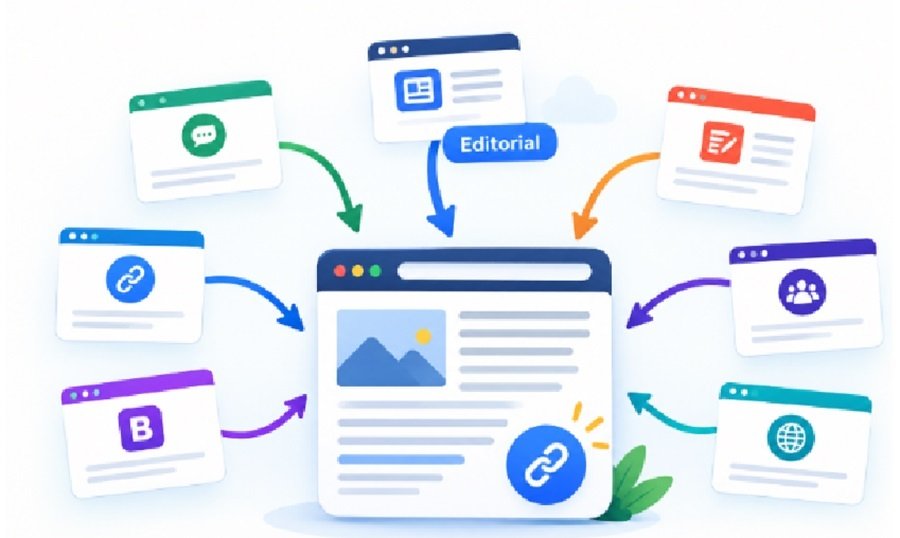
Link building is the work of earning hyperlinks from other websites to your own. Each link acts as a reference: another publisher decided your page was useful enough to send its own readers there. Search engines read that as a trust signal, and AI answer engines increasingly lean on the same signal when deciding which brands to cite.
The word that matters is earning. Google’s spam policies define link spam by intent, meaning links placed mainly to manipulate rankings rather than to help readers. Two identical links can be worth very different amounts depending on how they were acquired. Modern link building is closer to public relations and content distribution than to a purely technical SEO task.
Why link building still matters
Links remain one of the strongest external signals in classic search, and the web is stingy with them. An Ahrefs analysis of more than a billion pages, as reported by Blue Tree Digital, found that over 66% of pages have no referring domains at all. A page with even a handful of relevant links already stands apart from most of the web.
There is a second payoff. Semrush notes that tools such as ChatGPT, Perplexity and Google’s AI Overviews judge authority partly by which sources credible sites reference. A brand that is cited across relevant, trustworthy sites is easier for those systems to recognise, which makes link building a visibility investment as well as a ranking one.
What makes a link worth having
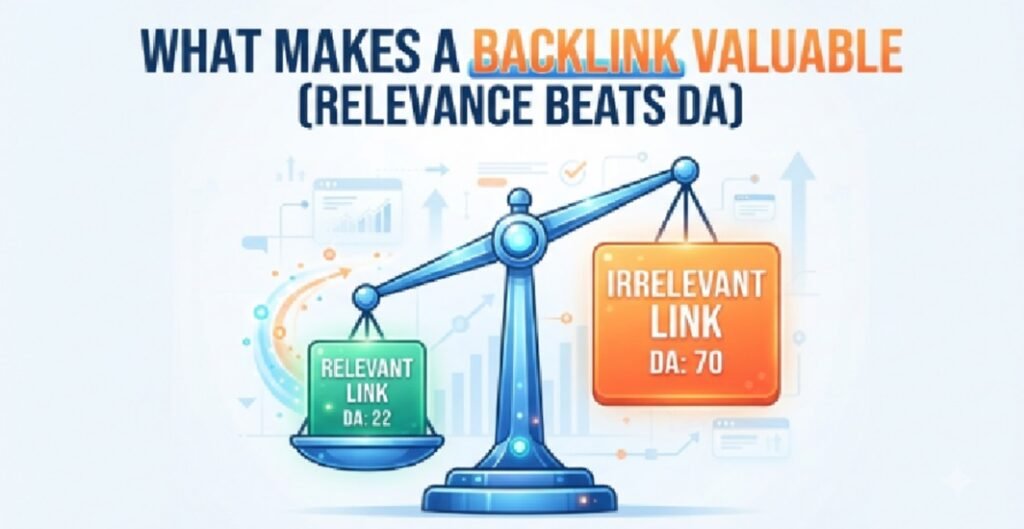
Before choosing any tactic, decide what a good link looks like. Judge each opportunity against a few practical checks rather than a single authority score.
| Factor | Strong signal | Weak signal |
|---|---|---|
| Relevance | The site covers your topic, industry or region | An unrelated site with a “write for us” page |
| Placement | Inside editorial copy, next to supporting context | Footer, sidebar or bulk author-bio links |
| Editorial control | An editor chose to include it | Paid, swapped or auto-generated |
| Audience | Real readers and organic visibility | High metrics but no actual visitors |
| Anchor text | Natural, descriptive wording | The same exact-match commercial phrase repeated |
A useful shortcut: if the publisher would happily keep the link even if search engines did not exist, it is probably worth earning.
How to build backlinks: link building strategies that still work
If you are wondering how to build backlinks without risking a penalty, start with the approaches below. Each depends on giving the publisher a reason to link, which is why they survive algorithm updates.
Digital PR and expert commentary
Journalists working to same-day deadlines need quotable experts and fresh angles. Respond quickly, keep pitches short and specific, and keep a bio and headshot ready. For UAE businesses, that often means commenting on regional market shifts or consumer behaviour where you have real data or first-hand experience. Digital PR is slower than buying placements, but the coverage tends to come from sites that carry genuine weight.
Original data and linkable assets
Service and product pages rarely attract links by themselves. People link to things they can cite: a survey, a benchmark, a calculator, a template, a glossary or a well-documented case study. Backlinko has reported that clear charts and graphs from its research studies earned two to three times more links, and that one of its case studies has been linked to thousands of times, because both are easy to reference. Only publish data you actually collected, and explain how you collected it.
Guest contributions on real editorial sites
Guest posting still works when the site has genuine editorial standards and an audience your customers read. It stops working when the site exists to sell placements. Google’s October 2025 spam update reportedly targeted large networks publishing thin, AI-written articles purely to carry paid links. Vet every site before you pitch: check for real traffic, a consistent topic focus and a sensible number of outbound links.
Broken link building and link reclamation
Find a relevant page with a dead outbound link, tell the site owner, and suggest your working page as the replacement. The logic is simple: you are fixing a problem for them. Reclamation is the sibling tactic. Search for mentions of your brand, then ask for a link wherever the mention has none.
Partner, supplier and association listings
If you have real relationships, such as a software integration, a reseller agreement, a trade association membership or a supplier network, ask to be listed on the partner or member page. These links usually last as long as the relationship does. Niche directories with editorial review can help, while pay-to-submit directories are worth skipping. Never invent a partnership to earn a listing.
Get the page ready before you start link building
Outreach fails more often because of the destination than the pitch. Before contacting anyone, check that the page deserves the attention and authority it is about to receive.
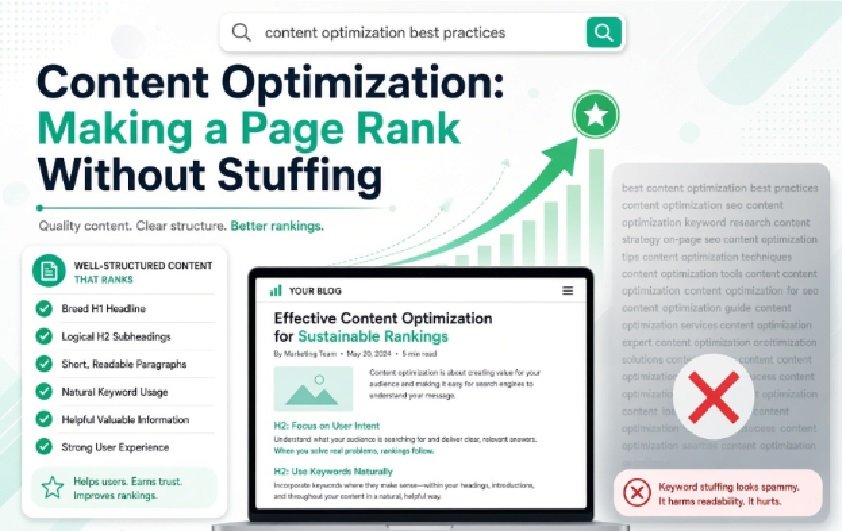
- Match the search intent. The page should answer the query it is meant to rank for, with a clear title, one H1 and headings that make the structure obvious.
- Pick link targets deliberately. Point outreach at guides, data and tools, then pass that authority to commercial pages through internal linking. Few people link straight to a service page.
- Vary the anchor text. Ask for natural, descriptive wording instead of requesting the same commercial phrase every time.
- Fix what is broken. Redirect dead URLs that already have backlinks, and make sure key pages load quickly on mobile.
- Add proof. Named authors, dated updates, cited sources and clear business details give an editor confidence to reference you.
This is where link building and on-page SEO services overlap. Earned links raise the ceiling, but the page itself decides whether that authority becomes rankings and enquiries.
Link building tactics that no longer work
Some tactics are still sold aggressively. Treat them as risk, not shortcuts.
- Private blog networks and automated link drops. At best ignored by Google’s systems, at worst a manual action risk.
- Paid links without disclosure. Buying links that pass ranking signals breaches Google’s link spam policy. Genuine sponsored placements should carry rel=”sponsored”.
- Reciprocal link schemes. Coordinated “you link to me, I link to you” arrangements leave obvious footprints.
- Mass directory submissions. Volume from low-quality directories adds noise, not authority.
- Exact-match anchors at scale. Repeating one commercial phrase across dozens of links looks manufactured.
- Chasing metrics over relevance. A few relevant editorial links routinely outperform hundreds of poor ones.
If your profile already contains links like these, audit them before adding more. Use the disavow tool carefully and only for clearly toxic links, then put new effort into earning editorial placements.
Link building in the UAE: what changes locally
UAE businesses compete in a market where English and Arabic search behaviour sit side by side and regional relevance matters as much as raw authority. Local link building benefits from a few adjustments:
- Prioritise regional relevance. A link from a UAE or GCC publication, industry body or business community can mean more to a Dubai service business than a generic global mention.
- Consider Arabic-language coverage. If your customers search in Arabic, Arabic-language links can support both reach and relevance. Avoid machine-translated pages.
- Use local proof. Chambers, associations, event pages and partner directories reflect real business presence.
- Keep business details consistent. Name, address and phone details should match across every listing you control.
Local context helps only when it is real. Adding “Dubai” to every anchor does not make a link more relevant.
A practical 90-day link building plan
- Weeks 1 to 2: Audit. Review your current backlinks, the sites linking to competitors, and which of your pages genuinely deserve links.
- Weeks 3 to 4: Fix and prepare. Repair broken pages, tighten titles and headings, and improve internal links so incoming authority reaches priority pages.
- Weeks 5 to 8: Create one asset. Publish a single linkable piece: original data, a useful tool or a strong case study drawn from your own work.
- Weeks 9 to 12: Start outreach. Pitch journalists, relevant bloggers, partners and reclamation targets in small, personalised batches.
- Ongoing: Review. Track results monthly and repeat what earns links.
Treat the timeline as a starting point. Results arrive gradually, and no responsible provider can promise a fixed number of links or a ranking date.
How to measure whether link building is working
Counting links is the easy part and the least useful. Look at whether the links are the right kind and whether they move anything that matters:
- Referring domains from relevant sites, rather than total link count
- Impressions and rankings for the promoted pages in Google Search Console
- Referral traffic and enquiries from linking sites
- Whether your brand appears in AI answers for your category (spot-check manually)
If links arrive but rankings and enquiries do not move, the cause is often search intent or page quality rather than a shortage of links.
Where to start
Choose one page worth linking to, one tactic you can sustain and one measure of success. Sustainable link building rewards consistency: a few relevant links every month for a year is a stronger position than a burst of low-quality placements. If you want a second opinion on whether your pages are ready to earn and use links, talk to the One Conversion team.
FAQs
1. What is the difference between link building and on-page SEO?
On-page SEO improves what sits on your own pages: content, titles, headings, internal links and schema. Link building earns endorsements from other websites. The two work together, because links bring authority to a page and on-page work helps that page use it to match search intent.
2. Is link building still worth it in 2026?
Yes, particularly for competitive topics, provided the links are earned and relevant. Google’s spam systems discount manipulative links, so quality and relevance matter far more than volume. Expect gradual gains rather than quick spikes.
3. How many backlinks do I need to rank?
There is no fixed number. Compare your page with the pages already ranking for your target query, look at how many relevant domains link to them, and remember that page quality and search intent count as much as links.
4. Does Google allow paid backlinks?
Buying links to pass ranking signals breaches Google’s link spam policy and can lead to devaluation or a manual action. Genuine advertising and sponsorships are fine when they are disclosed and marked with rel=”sponsored”.
5. How long does link building take to show results?
Usually months rather than days. Google has to discover, crawl and reassess the links, and the effect depends on competition and on the quality of the page receiving them. Be wary of anyone guaranteeing a timeline.