Every time someone types a question into Google, a ranking system decides in a fraction of a second which handful of pages deserve their attention. SEO is the discipline of earning a place on that shortlist without paying for each click.
This guide explains how search engines find, store and rank pages, what actually moves a website up the results, and how to apply it if your business operates in the UAE, where people search in both Arabic and English and much of that searching happens on a phone.
What Is SEO?
Here is the short SEO meaning: search engine optimization is the practice of improving a website so search engines can understand its pages and show them to people looking for something relevant. Google’s own SEO Starter Guide frames it as two jobs: helping search engines understand your content, and helping users decide whether your page is worth a visit.
That second job matters more than most people expect. Ranking is not the finish line. A page that ranks but gets skipped in the results, or loses visitors within seconds, has solved only half the problem.
Organic results vs. paid results
A results page mixes two kinds of listings. Ads, marked “Sponsored”, appear because an advertiser is bidding on that query. Organic results appear because Google’s systems judged them the most useful answers. You cannot buy an organic position; Google states plainly that it doesn’t accept payment to crawl a site more often or rank it higher. Competing for those unpaid positions is the territory of SEO.
Results pages also hold far more than ten blue links today: AI Overviews, map listings, featured snippets, “People also ask” boxes, and image and video results. Each one is another place a well-optimized page can appear.
How Search Engines Work: Crawl, Index, Serve
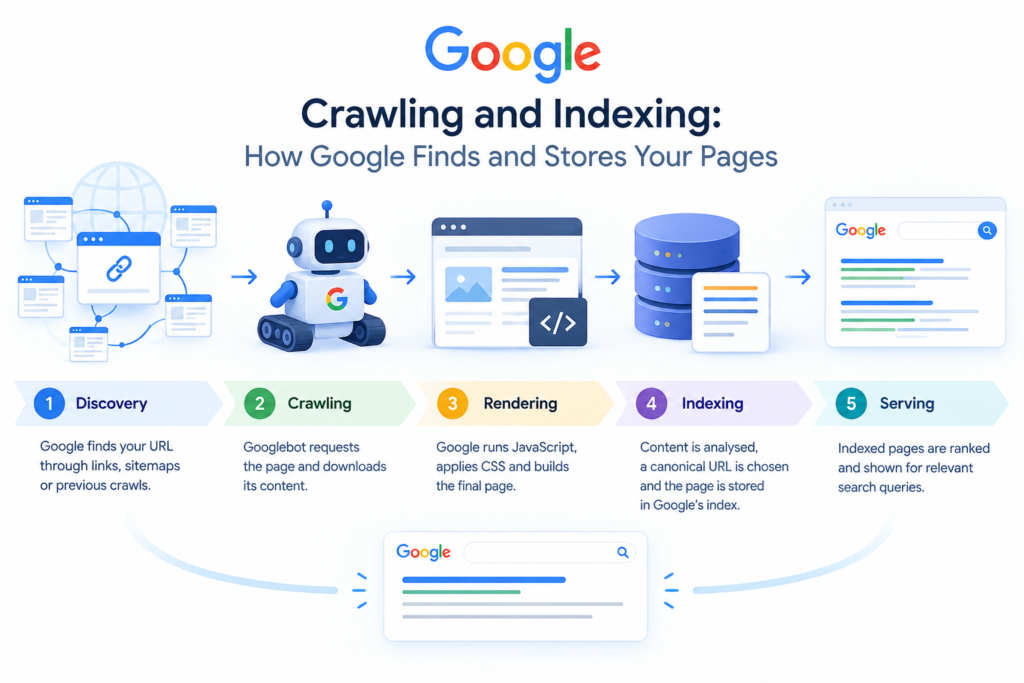
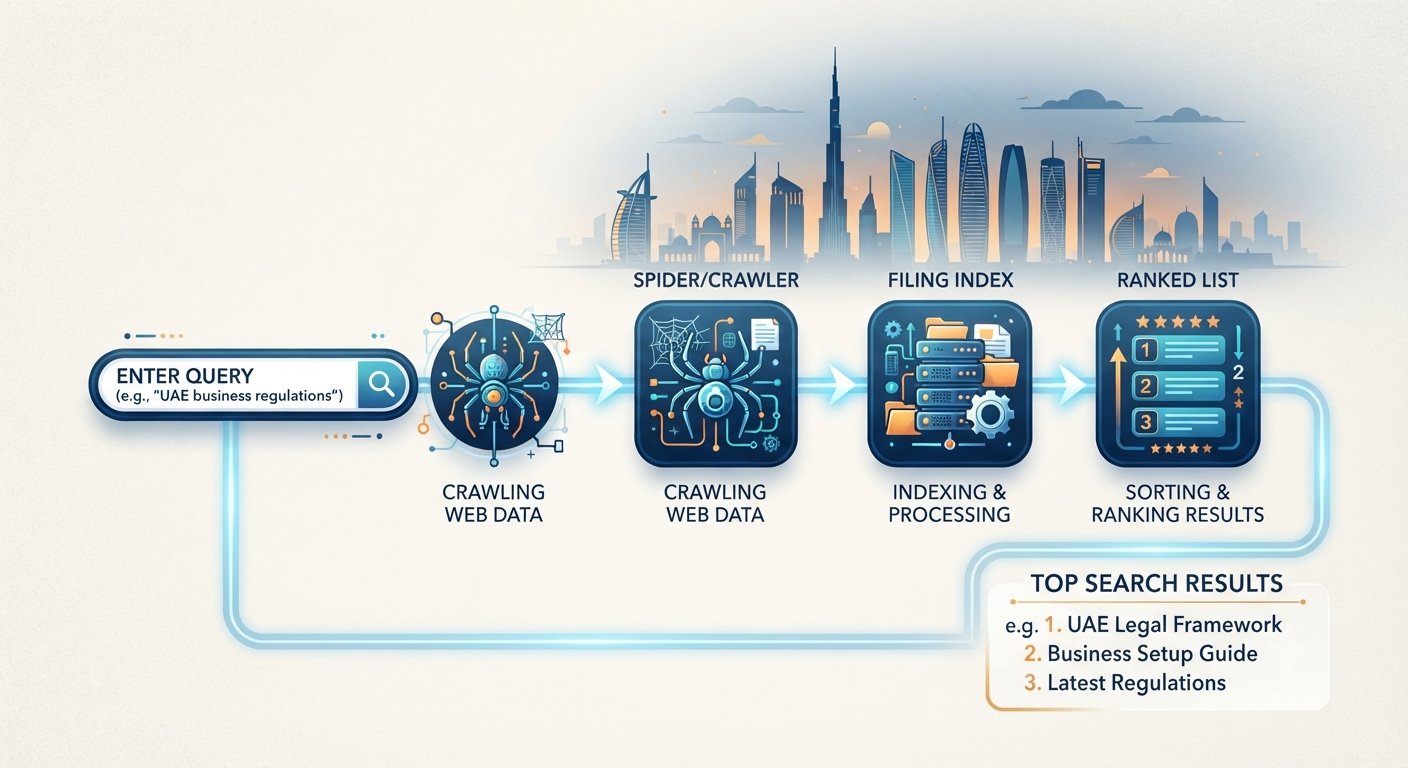
Before you can influence rankings, it helps to understand the pipeline every page passes through. Google describes three stages, and a page can drop out at any of them.
1. Crawling: finding the page
Automated programs called crawlers (Google’s is Googlebot) move across the web by following links and reading XML sitemaps, downloading the text, images and video they find. If no link points to a page and it isn’t listed in your sitemap, Google may never discover it. Pages blocked in robots.txt, hidden behind a login or reachable only through broken navigation run into the same wall.
2. Indexing: understanding and storing it
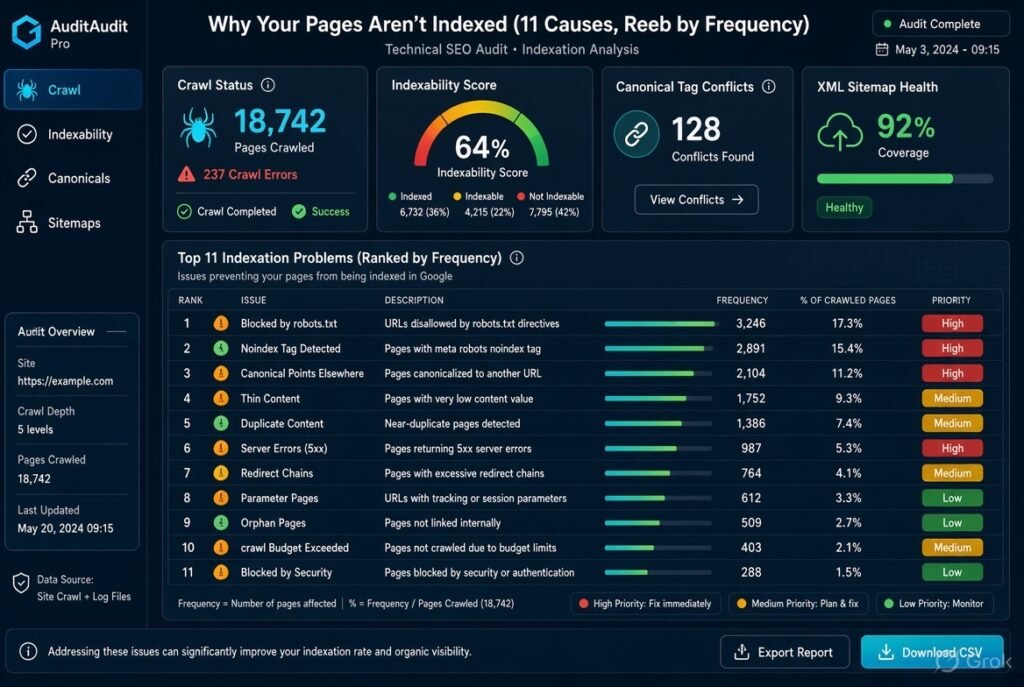
Next, Google analyzes what the page is about: its text, title, headings, images, structured data and language. When several pages carry near-identical content, Google groups them and picks one canonical version to show. Being crawled does not guarantee being indexed. Thin, duplicated or low-value pages are routinely left out.
3. Serving: ranking the results
When someone searches, Google pulls matching pages from its index and orders them using many signals. Google notes that relevance can depend on the searcher’s location, language and device. That is why someone searching “family lawyer” in Dubai Marina sees different results from someone in Abu Dhabi, and why an Arabic page can rank for an Arabic query where an English page on the same topic won’t.
| Stage | What happens | What commonly goes wrong | What you control |
| Crawling | Googlebot discovers URLs through links and sitemaps | Orphan pages, robots.txt blocks, server errors | Internal links, XML sitemap, a clean robots.txt |
| Indexing | Content is analyzed, duplicates grouped, a canonical chosen | Thin or duplicate pages, a “noindex” tag left on by mistake | Unique content, canonical tags, correct meta robots |
| Serving | Indexed pages are ranked for each query | Weak intent match, little authority, poor mobile experience | Content quality, earned links, page experience |
How SEO Works in Practice
Once you know the pipeline, how SEO works becomes easier to picture. You remove anything that stops a page from being crawled and indexed, then make that page the most relevant, credible answer to a specific search. Search systems are effectively asking three questions about every page.
Does this page match what the searcher wants?
Search intent is the reason behind a query. Someone typing “what is a VAT return” wants an explanation; someone typing “VAT consultant Sharjah” wants a provider. Most queries fall into four broad groups: informational (learn something), commercial (compare options), transactional (buy or book) and navigational (reach a specific site).
The fastest way to read intent is to look at what already ranks. If the top ten results are all guides, a sales page will struggle, no matter how well optimized it is.
Is it the most useful answer available?
Google’s guidance keeps returning to “helpful, reliable, people-first content”. In practice that means answering the question early, covering what a reader will ask next, using real examples and keeping the page current. Google’s quality rater guidelines describe quality through E-E-A-T: experience, expertise, authoritativeness and trustworthiness. It isn’t a single score you can tune, but it makes a good editorial checklist. Who wrote this? What do they actually know? Why should a reader believe it?
Can it be trusted?
Links from other reputable websites still work as votes of confidence, especially when they are relevant. A mention from a respected UAE logistics publication does more for a freight company than dozens of links from unrelated directories. Genuine reviews, consistent business details and brand mentions across the web round out the picture.
The Four Pillars of Search Engine Optimization
Most SEO work falls into four areas. A weakness in one limits the others: brilliant content on a site Google can’t crawl goes nowhere, and a technically flawless site with nothing worth reading doesn’t either.
Technical foundations
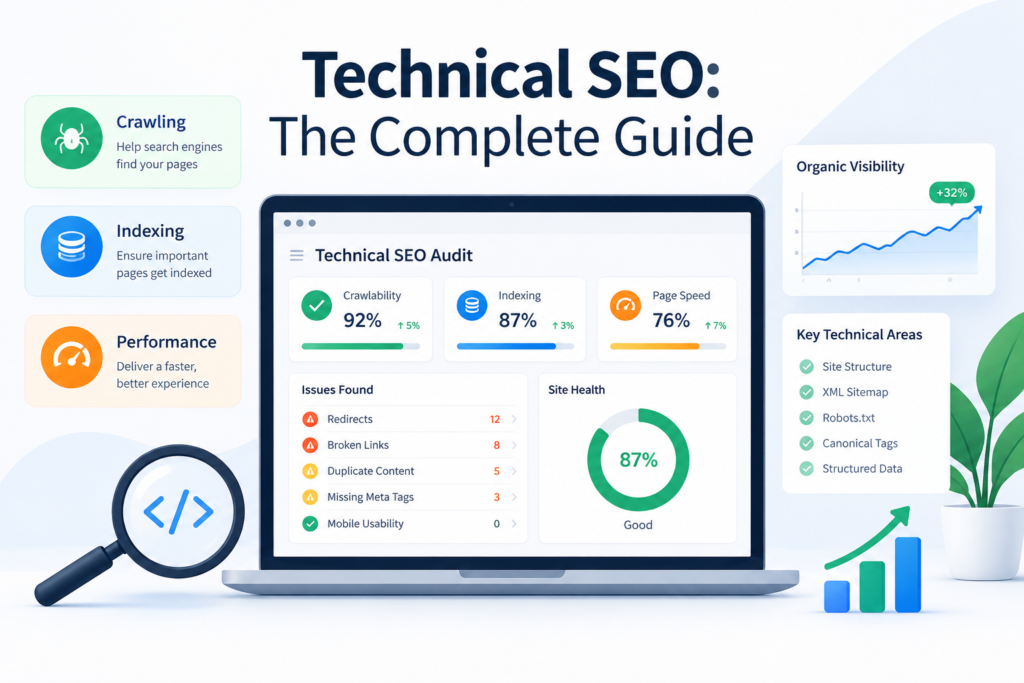
This is the plumbing. It covers crawlability and indexing, site speed and Core Web Vitals, mobile usability, HTTPS, XML sitemaps, structured data, redirects and, for bilingual sites, hreflang tags that tell Google which language version to show. Google primarily uses the mobile version of a site for indexing, so a page that works on desktop but breaks on a phone has a real problem.
On-page optimization
On-page work shapes individual pages around a clear topic and intent: the title tag, meta description, headings, body content, image alt text, URL and internal links. Compare a title like “Corporate Tax Registration in the UAE: Step-by-Step Guide” with “Services – Page 3”. The first tells both Google and the reader exactly what they’ll get.
Off-page authority
Off-page signals come from the rest of the web: backlinks, digital PR, partnerships, citations and brand mentions. Quality and relevance matter far more than volume. Buying links or joining link schemes breaks Google’s spam policies and can cost you visibility you’ve already earned.
Local search
For any business that serves customers in a defined area, local visibility is often where the leads come from. The core pieces are a complete, accurate Google Business Profile, consistent name, address and phone details across directories, a steady flow of genuine reviews, and location pages that contain useful local information rather than a city name swapped into the same template.
| Pillar | Core question | Typical tasks | Useful tools |
| Technical | Can search engines access and render the site? | Fix crawl errors, speed, mobile issues, schema, hreflang | Google Search Console, PageSpeed Insights |
| On-page | Does each page match a clear intent? | Keyword research, content, titles, headings, internal links | Keyword research tools, your CMS |
| Off-page | Does the wider web vouch for you? | Digital PR, partnerships, earning relevant links | Backlink analysis tools |
| Local | Do you show up for nearby searches? | Google Business Profile, reviews, local citations | Google Business Profile dashboard |
Search Optimization in the UAE: What’s Different
The fundamentals are universal, but a few features of the UAE market shape strategy in practice.
- Two languages, two sets of results. Arabic and English searches for the same service often return different pages and different competitors. Translating English pages word for word rarely works. Research Arabic keywords separately, write for how people actually phrase things, and use hreflang (for example en-AE and ar-AE) so each audience lands on the right version. Arabic pages also need a right-to-left layout that holds up on mobile.
- Emirate and neighborhood intent. Searchers often name an emirate or area, or rely on “near me”. A clinic in Al Barsha competes in a different local set from one in Khalifa City, so location pages and your Google Business Profile should reflect where you actually operate.
- Mobile first, in every sense. Test key pages on a phone over a mobile connection. Tap-to-call and WhatsApp buttons should work, forms should be short, and nothing should shift around as the page loads.
- Crowded commercial niches. Real estate, hospitality, legal and financial services are heavily contested. Newer sites usually win earlier by targeting specific, longer queries (“off-plan apartments in Dubai Creek Harbour with payment plan”) before chasing broad head terms.
- Regulated topics need extra care. Health, finance and legal pages fall into what Google calls “Your Money or Your Life” topics. Claims must be accurate, sourced and reviewed by someone qualified.
SEO vs. PPC: Which Does Your Business Need?
Organic and paid search solve different problems, and most growing businesses end up using both.
| Factor | Organic search | Paid search (PPC) |
| Cost model | Investment in content, technical work and expertise; no fee per click | You pay for every click |
| Speed | Builds over months | Traffic as soon as campaigns go live |
| Durability | Rankings can hold with ongoing maintenance | Traffic stops when the budget stops |
| Where you appear | Organic listings, map results, AI Overviews | Sponsored ad slots |
| Best for | Long-term, compounding visibility | Launches, promotions, quick keyword testing |
A practical pattern: run paid search campaigns to learn which keywords actually produce enquiries, then invest organic effort in the terms that prove valuable.
How Long Does It Take to See Results?
There is no fixed timeline, and anyone who promises one should be questioned. Google’s guidance on hiring a search professional is blunt: no one can guarantee a #1 ranking. What you can expect is that meaningful movement is measured in months rather than weeks, and it depends on:
- how much authority and history your domain already has
- how competitive your keywords are
- the technical condition of the site when work begins
- how consistently content and improvements are shipped
Early wins usually come from fixing indexing problems and improving pages that already sit on page two, because Google already considers them partly relevant. Treat SEO as a compounding investment: the work you do this quarter keeps paying off long after it’s published.
A Practical 7-Step Plan to Get Started
- Set up measurement. Verify your site in Google Search Console and connect Google Analytics 4. Without a baseline, you can’t tell what worked.
- Run a technical health check. Review the Pages report in Search Console for excluded URLs, check mobile usability and test your key templates in PageSpeed Insights.
- Research keywords by intent. List the questions customers ask your sales team, in English and Arabic, then validate them with keyword data and a look at the current results.
- Give each page one job. Map one primary topic to one URL. Two pages chasing the same query tend to hold each other back.
- Improve what you already have. Rewrite weak titles, fill content gaps and add internal links to pages that already get impressions but few clicks.
- Publish content that answers real questions. Guides, comparisons, pricing explainers and FAQs often outperform generic “about our services” copy.
- Build authority and local signals. Complete your Google Business Profile, ask happy customers for reviews and pursue genuine PR and partnership links.
Review progress monthly, and revisit the plan each quarter as rankings, competitors and search features change.
Common Mistakes That Hold Websites Back
- Chasing keywords instead of intent. Ranking for a term nobody converts on is a vanity win.
- Keyword stuffing. Repeating a phrase unnaturally makes pages harder to read and breaks Google’s spam policies.
- Duplicate location pages. Ten identical pages with only the emirate name swapped add little value and often get filtered out.
- Launching a redesign without redirects. Changing URLs without 301 redirects throws away the authority old pages had built up.
- Leaving “noindex” on after launch. A single tag carried over from a staging site can remove an entire website from Google.
- Machine-translating Arabic content. Readers notice immediately, and literal translations usually miss the terms people actually search.
- Treating SEO as a one-off project. Competitors keep publishing and search features keep changing; visibility needs upkeep.
How AI Search Is Changing Organic Visibility
AI Overviews and AI Mode now answer many questions directly on the results page, and assistants such as ChatGPT, Gemini and Perplexity summarize web content for their users. That changes how people click, but not the foundations. Google says there are no additional requirements to appear in its AI features: a page needs to be indexed and eligible to show with a snippet, and the same SEO best practices apply.
What does shift is emphasis. Pages that state answers clearly, structure information logically, offer original insight and come from a recognizable, trustworthy source are the ones most likely to be surfaced, quoted or cited.
Measuring What Matters
Rankings are easy to screenshot and easy to misread. Track a small set of metrics that connect visibility to business outcomes.
| Metric | Where to find it | What it tells you |
| Impressions and clicks | Google Search Console | How often you appear and how often people choose you |
| Click-through rate by query | Google Search Console | Whether titles and descriptions earn the click |
| Indexed pages | Search Console Pages report | Whether Google can see the pages you care about |
| Organic sessions and engagement | Google Analytics 4 | Whether visitors find what they came for |
| Organic conversions | GA4 key events (forms, calls, WhatsApp clicks) | Whether search traffic becomes enquiries and revenue |
Getting Expert Help with SEO in the UAE
Plenty of businesses handle the basics in-house, and the steps above are a solid starting point. Specialist support starts to make sense when the site is large or bilingual, when a migration or redesign is coming up, or when the market is competitive enough that small technical and content details decide who ranks.
When you speak to any provider, ask how they measure success, what timeframe they expect and whether they follow Google Search Essentials. Be wary of anyone promising guaranteed rankings. If you’d like a clear view of where your site stands, One Conversion’s SEO services start with an audit of your technical health, content and competitors, followed by a prioritized plan you can act on. Get in touch with our team to talk it through.
FAQs
1. What does SEO stand for?
SEO stands for search engine optimization: the process of improving a website so it appears more often, and more prominently, in unpaid search results on Google and other search engines.
2. Is SEO free?
Organic clicks cost nothing, but the work behind them doesn’t. You invest time, expertise or agency fees in content, technical fixes and link building instead of paying per click.
3. How long does SEO take to show results?
It varies with competition, your site’s history and how much work is done. Most sites see meaningful change over several months, while fixes to indexing problems can show impact sooner.
4. What is the difference between SEO and SEM?
SEM (search engine marketing) is usually used as the umbrella term for gaining visibility in search, and many people use it to mean paid search ads specifically. SEO focuses only on unpaid, organic results.
5. Can I do SEO myself?
Yes. Small businesses can handle the essentials with free tools such as Google Search Console and Google Business Profile. Larger, bilingual or highly competitive sites usually benefit from specialist support.