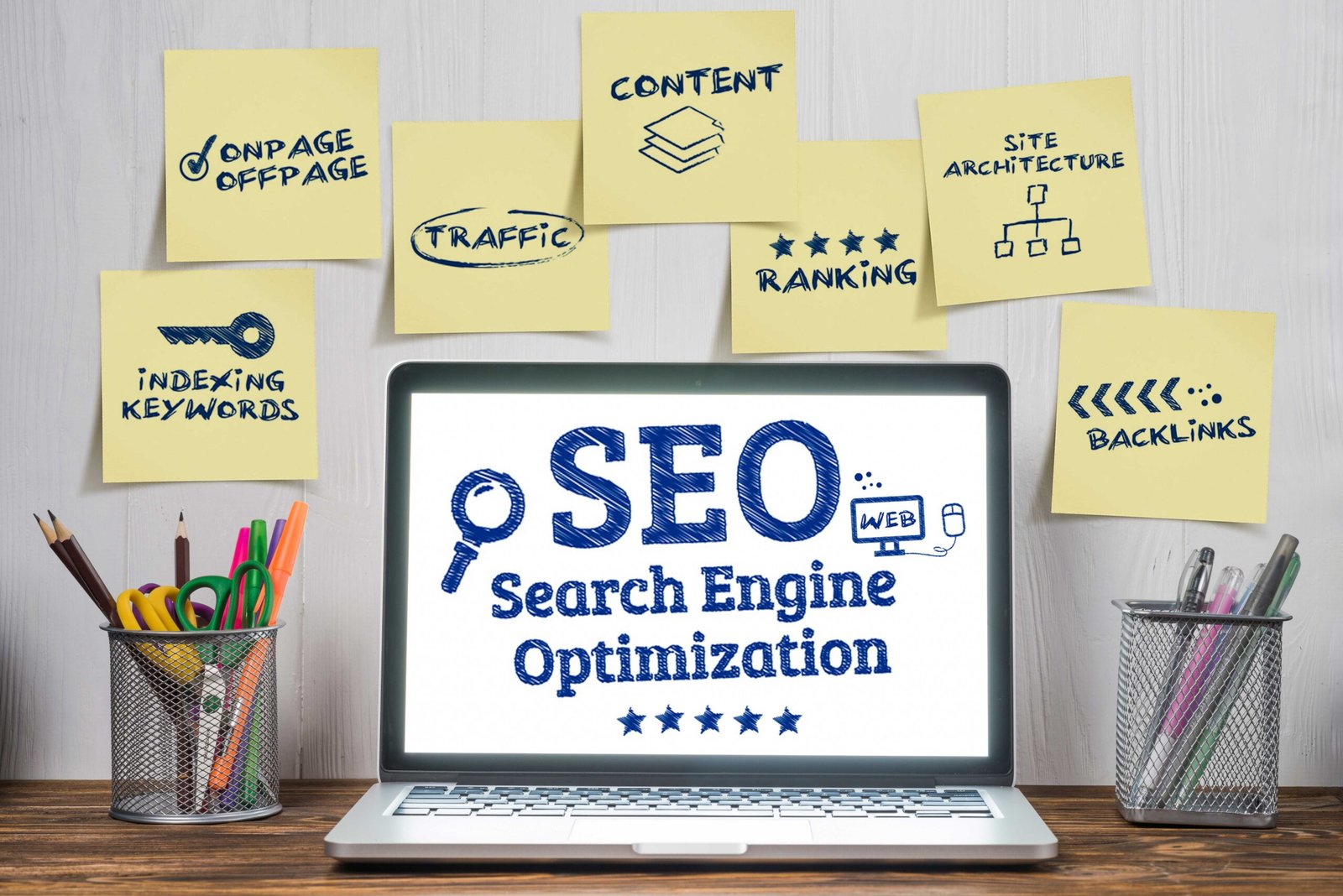
On-page SEO is the set of optimizations you control directly on a web page: the copy, the headings, the meta tags, the internal links, and the technical details that help Google understand what a page is about and help visitors find what they actually need. Get these fundamentals right and even an ordinary page starts pulling qualified traffic. Get them wrong, and no amount of link building or content volume will make up for it.
This on-page SEO checklist walks through every element that matters, in a practical order, whether you are publishing a new page or auditing one that has stalled in the rankings.
What Is On-Page SEO?
On-page SEO refers to the optimizations made directly within a webpage’s content and HTML source code, as opposed to off-page SEO, which covers external signals like backlinks and brand mentions. It includes everything from keyword placement and heading structure to internal links, image alt text, and page speed.
The goal of on-page optimization is twofold: help search engines correctly interpret and rank the page, and give visitors a page that actually answers their query well enough that they stay, read, and convert. The two goals overlap more than people assume. A page structured clearly for search engines is, almost always, a page that is easier for a human to scan and understand.
Why On-Page SEO Matters
Search engines cannot judge a page’s usefulness the way a person can. They rely on signals: the words in your title tag, the structure of your headings, how your content relates to the query, and how your page compares to others already ranking for it. On-page SEO is how you supply those signals accurately, rather than leaving Google to guess.
For businesses in the UAE, where search competition across sectors like real estate, retail, hospitality, and professional services has intensified in recent years, on-page SEO is often the fastest lever available. Technical SEO and link building take longer to show results. A well-executed on page SEO checklist, applied consistently across a site’s key pages, can move rankings within weeks rather than months, particularly when the content gap is the main issue holding a page back.
On-Page SEO Checklist: The Core Elements
The following on page SEO checklist covers the elements that consistently make the biggest difference, in the order they are usually addressed during an audit or a new-page build.
1. Keyword Research and Search Intent
Before writing a word of content, confirm what the page is actually trying to rank for and what searchers expect to find. A page targeting “on page SEO” needs to satisfy an informational intent someone learning the discipline or checking their own work not a transactional one. Mismatched intent is one of the most common reasons a well-written page still fails to rank.
Map a primary keyword to each page, then group closely related terms and questions around it rather than spreading one page thin across unrelated topics.
2. Title Tags
The title tag is still one of the strongest on-page signals available. It should include the primary keyword, ideally near the front, stay under roughly 60 characters so it does not get truncated in search results, and be written to earn a click rather than simply describe the page.
Avoid stuffing multiple keyword variations into the title. One clear, specific title outperforms a title crammed with synonyms.
3. Meta Descriptions
Meta descriptions do not directly influence rankings, but they shape click-through rate, which is exactly why they belong near the top of any on page SEO checklist. Write a description that states what the reader will get from the page, includes the primary keyword naturally, and stays within roughly 150–160 characters.
4. URL Structure
Short, readable URLs that include the target keyword perform better than long, parameter-heavy ones. Strip out stop words, avoid dates unless the content is genuinely time-bound, and keep the structure consistent with the rest of the site’s architecture.
5. Heading Hierarchy
Use a single H1 that states the page’s main topic, then break the content into H2 sections that each cover one subtopic. H3s and H4s should only appear where a section genuinely needs further breakdown, not as a way to insert extra keyword variations. A reader scanning only the headings should understand the full scope of the page.
6. Content Quality and Depth
This is where most on-page SEO checklists fall short, because they treat content as a box to check rather than the actual product being ranked. Content needs to fully answer the query, cover the subtopics a searcher expects, and go into enough depth that the reader does not need to open a second tab. Length should follow from intent coverage, not the other way around; padding a page to hit a word count target tends to hurt readability without helping rankings.
Strong on-page optimization at the content level also means avoiding repetition, backing up claims instead of stating them as fact, and using terminology the way someone genuinely familiar with the topic would.
7. Internal Linking
Internal links pass authority between pages and help both users and search engines understand how content on a site relates. Link to and from a page using descriptive, natural anchor text, and prioritize links from already-authoritative pages toward newer or underperforming ones.
8. Image Optimization
Compress images before upload, use descriptive file names, and write alt text that accurately describes the image rather than stuffing it with keywords. Alt text exists primarily for accessibility; SEO benefit is a secondary effect of doing it properly.
9. Page Speed and Core Web Vitals
A slow page undermines every other on-page SEO effort. Compress and lazy-load images, minimize render-blocking scripts, and keep Core Web Vitals particularly Largest Contentful Paint and Cumulative Layout Shift within Google’s recommended thresholds.
10. Mobile Usability
Google indexes and ranks primarily based on the mobile version of a page. Text should be legible without zooming, tap targets should be appropriately sized, and layouts should not break or overlap on smaller screens.
11. Schema Markup
Structured data does not directly boost rankings, but it helps search engines parse page content more precisely and can unlock rich results such as FAQ snippets or breadcrumbs, which improve visibility and click-through rate.
On-Page SEO vs. Technical SEO vs. Off-Page SEO
These three disciplines are often confused, though each serves a different purpose:
- On-page SEO covers what is on and within the page itself: content, headings, meta tags, internal links, and image optimization.
- Technical SEO covers how a site is built and crawled: site architecture, indexability, structured data implementation, redirects, and server performance.
- Off-page SEO covers signals earned outside the site: backlinks, brand mentions, and third-party reviews.
A page can be flawlessly written and still underperform if the underlying technical foundation is broken, and a technically sound site can still fail to rank if the on-page content does not genuinely satisfy search intent. Treat the three as complementary, not interchangeable.
Common On-Page SEO Mistakes to Avoid
Even experienced teams repeat a handful of mistakes that quietly undercut an otherwise solid on page SEO checklist:
- Keyword stuffing repeating a phrase unnaturally in an attempt to signal relevance, which reads poorly and can trigger over-optimization penalties.
- Duplicate title tags and meta descriptions across multiple pages, which confuses both users and search engines about which page to show for a given query.
- Thin content that technically covers a topic but does not answer the questions a searcher actually has.
- Missing or generic alt text that skips real image descriptions in favor of exact-match keywords.
- Ignoring search intent optimizing a page for a keyword phrase without checking whether the top-ranking results are informational, commercial, or transactional.
- Orphaned pages with no internal links pointing to them, which makes them harder for both users and crawlers to discover.
How to Apply This Checklist to an Existing Page
Auditing an existing page is usually faster and higher-impact than building new content from scratch, because the page often already has some ranking signal to build on. Start by confirming the page still matches current search intent for its target keyword, then work through title tag, meta description, heading structure, and content depth before touching internal links and technical elements. Re-check rankings and traffic four to six weeks after changes go live, since on-page updates typically take a few crawl-and-reindex cycles to fully register.
How One Conversion Approaches On-Page Optimization
At One Conversion, on-page SEO is treated as a repeatable process rather than a one-time fix. Every page audit starts with search intent and keyword mapping, moves through content and structural review, and ends with a prioritized list of changes ranked by expected impact not just a generic checklist run top to bottom. For businesses across the UAE competing in crowded search results, that prioritization is often what separates a page that climbs the rankings from one that stays flat despite the effort put into it.
If your pages already rank on page two or three, in-depth on-page optimization is frequently the fastest way to close the gap without waiting on a longer-term link-building campaign.