If you have just approved an SEO budget, the first question on your mind is the one almost every client asks in the kickoff meeting: how long does SEO take before it starts paying for itself?
The honest answer is a range, not a date. Most websites see early movement within three to six months and meaningful traffic and lead growth between six and twelve months. Brand-new domains, highly competitive keywords and crowded markets such as Dubai real estate can take longer.
Below, we break down what published ranking data actually shows, what a realistic SEO timeline looks like month by month, and how to tell whether a campaign is on track long before revenue shows up in your CRM.
The Short Answer: How Long Does SEO Take?
How long does SEO take? For most businesses, SEO takes 3 to 6 months to show early results, such as more search impressions and rising keyword positions, and 6 to 12 months to deliver consistent organic traffic and leads. New websites and highly competitive keywords often need 12 months or more.
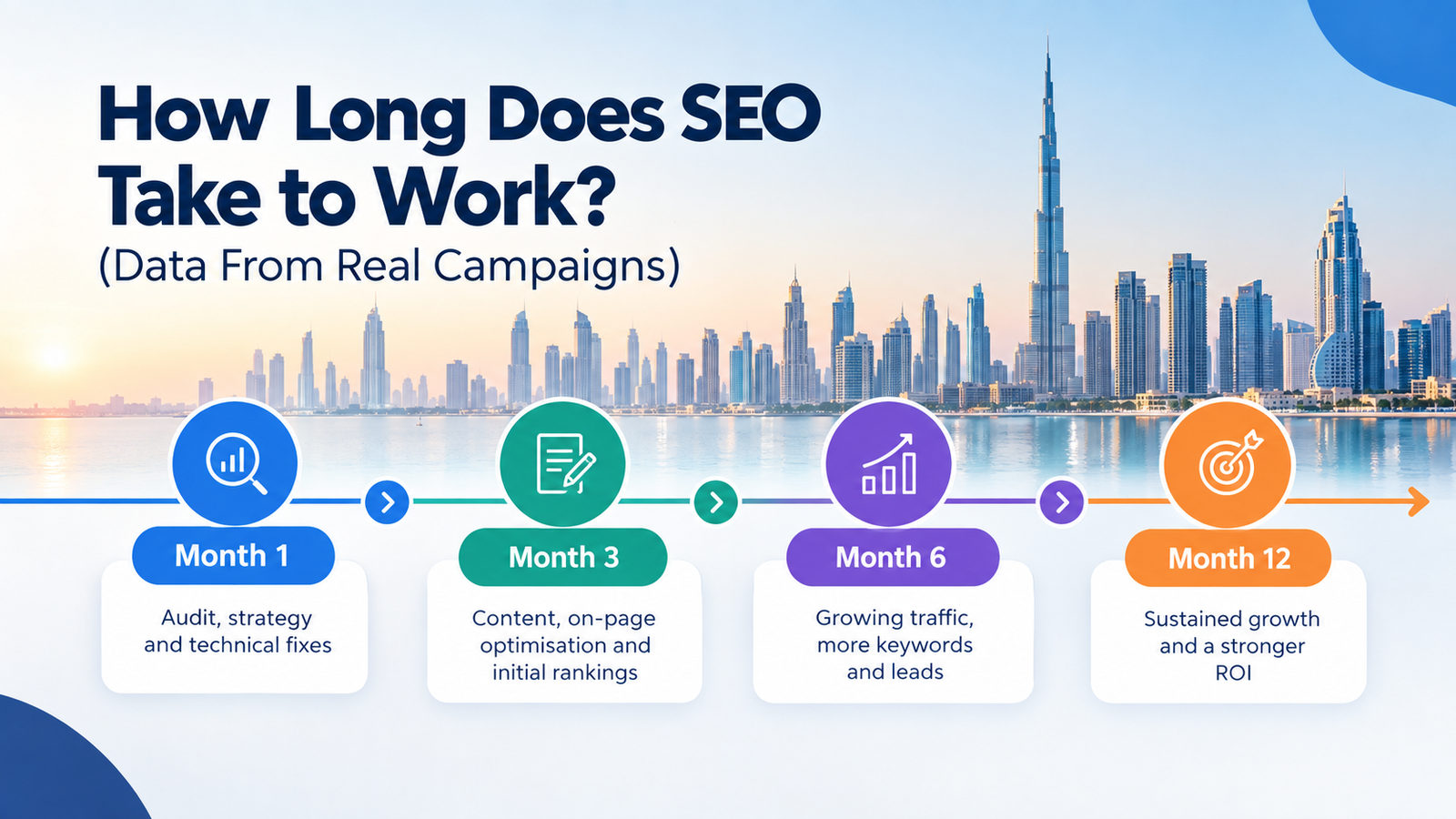
Those ranges describe a sequence rather than a single finish line:
| Stage | Typical window | What you should see |
| Foundations | Months 1–2 | Audit completed, technical issues fixed, key pages indexed, tracking in place |
| Early signals | Months 3–6 | Rising impressions, long-tail rankings, target keywords moving from page three to page two |
| Traction | Months 6–12 | Page-one rankings for mid-competition terms and a steady rise in organic enquiries |
| Compounding | 12 months + | Rankings for competitive head terms; organic search becomes a dependable acquisition channel |
These are typical ranges, not guarantees. Where your business lands depends on your starting point, your competitors and how consistently the work gets done.
What the Data Says About SEO Results Time
Published research gives a more grounded answer to how long does SEO take than any agency sales pitch. Two sources are worth knowing.
Google’s own guidance
Google has never published a fixed timeframe for rankings. However, in its official video How to hire an SEO, Google’s Maile Ohye explained that in most cases, SEOs need four months to a year to help a business first implement improvements and then see potential benefit. Note the two phases: implementation comes first, results follow.
Google’s documentation is equally clear about the limits of any promise: “No one can guarantee a #1 ranking on Google.”
Ahrefs’ ranking study: 2017 vs. 2025
Ahrefs tracked the ranking history of large samples of newly published pages, first in 2017 and again in an update published in May 2025. The comparison shows that ranking has become harder, not easier:
| Finding | 2017 study | 2025 update |
| New pages reaching Google’s top 10 within a year (for at least one keyword) | 5.7% | 1.74% |
| Share of current top-10 pages less than one year old | 22% | 13.7% |
| Share of top-10 pages more than three years old | 59% | 72.9% |
| Average age of a #1 ranking page | About 2 years | About 5 years |
Source: Ahrefs, “How Long Does It Take to Rank in Google? And How Old Are Top Ranking Pages?” (updated May 2025).
The 2025 update adds a useful detail: among pages that did reach the top 10, around 41% got there within their first month. Ahrefs also noted that a page with no rankings after roughly six months has low odds of breaking through unless it is changed.
What this means for your campaign
- Most pages never rank on their own. Waiting is not a strategy. Pages rank when they are the best answer and have enough authority behind them.
- Age and authority compound. Older pages dominate the top 10 because they have had time to earn links, engagement and trust. The results you see in month 12 are built on the work done in months 1 to 11.
- Stalled pages need action, not patience. If a target page is still invisible after six months, rework the content, strengthen internal links or build authority to it, rather than simply waiting longer.
A Realistic SEO Timeline, Month by Month
Every campaign is different, but a well-run SEO timeline usually follows the same sequence. The phases below are the practical answer to how long does SEO take when the work is done in the right order.
Month 1: Audit, strategy and technical fixes
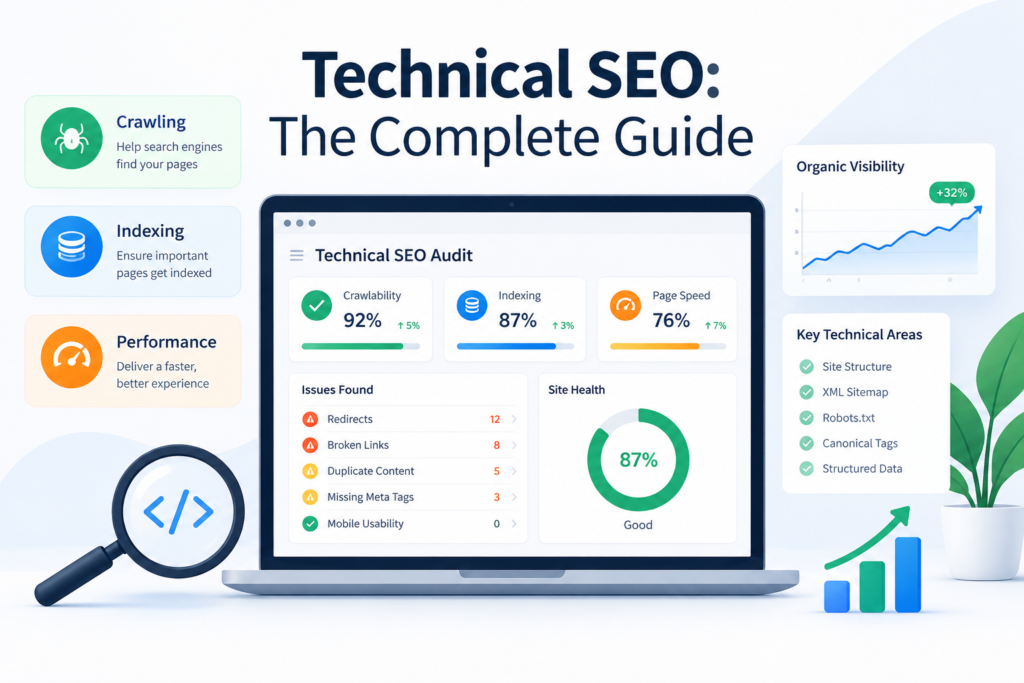
The first month is about diagnosis. A proper start includes a technical audit (crawl errors, indexing problems, site speed and Core Web Vitals, mobile usability, and hreflang if you run Arabic and English versions), keyword research mapped to specific pages, and a competitor gap analysis.
Tracking matters just as much. Google Search Console, Google Analytics 4 and conversion tracking for forms, calls and WhatsApp clicks need to be set up now, so you have a baseline to measure against. Expect little ranking movement this month; that is normal.
Months 2–3: On-page work and the first new content
Title tags, meta descriptions, headings and internal links are improved on priority pages. Service pages are rewritten to match what searchers actually want, and the first new content goes live. For businesses serving local customers, the Google Business Profile is completed and optimised.
The first signals usually appear in Search Console: more pages indexed and a gradual rise in impressions.
Months 4–6: The first measurable movement
Long-tail and lower-competition keywords start reaching page one. Competitive terms often climb from pages three to five into page two. Link building and digital PR, typically started in month two or three, begin to show an effect.
This is the right moment for a formal review: which pages are moving, which are not, and where to double down.
Months 6–12: Traffic and leads start compounding
Mid-competition commercial keywords reach page one, organic enquiries become noticeable, and content clusters start to build topical authority. For most businesses, this is the SEO results time that matters most, because it is when rankings turn into leads rather than just better positions.
Year 2 and beyond: Defend and expand
With a foundation in place, the focus shifts to competitive head terms, new services or emirates, Arabic content, refreshing pages that are losing ground, and earning visibility in AI-driven results such as Google’s AI Overviews. SEO does not switch off; competitors keep publishing, so rankings need maintaining.
Why SEO Takes Time: 7 Factors That Control the Pace
There is no universal answer to how long does SEO take, because the same work produces different speeds on different websites. These are the variables that matter most.
1. Your starting point
A ten-year-old domain with existing backlinks and indexed pages will move faster than a site launched last month. New domains have no track record for Google to rely on. Sites recovering from a poor migration, thin content or spammy links carry extra baggage that has to be cleared first.
2. Keyword competition
“SEO agency Dubai” and “commercial kitchen deep cleaning in Al Quoz” are different battles. Broad, high-volume terms are contested by established brands, directories and aggregators. Specific, high-intent long-tail terms usually rank sooner and often convert better.
3. Crawling and indexing
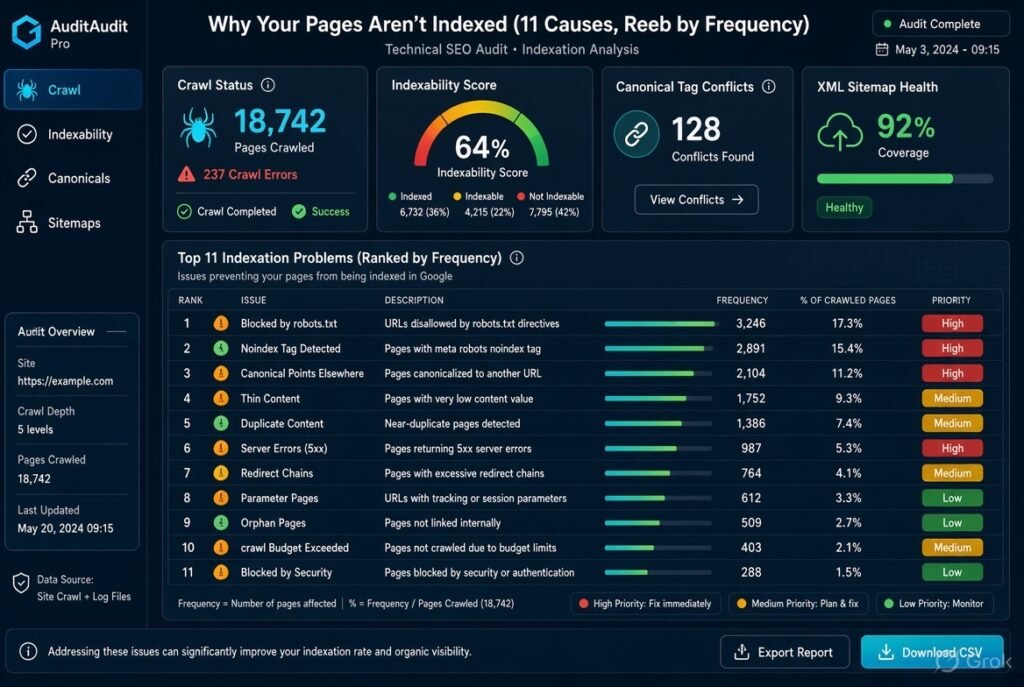
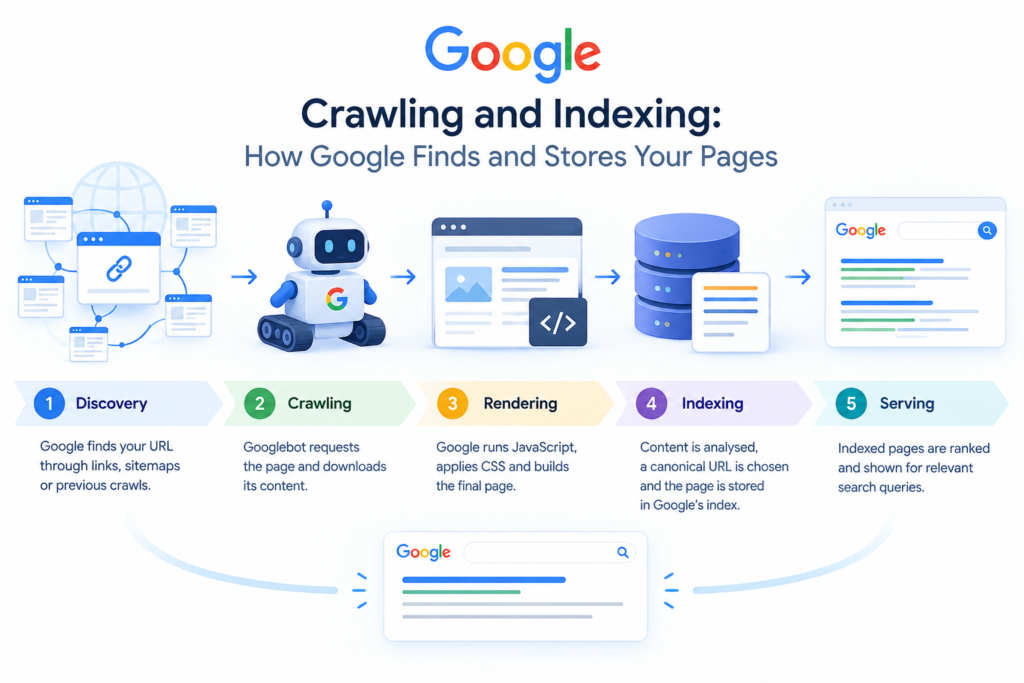
Google has to discover, crawl, render and index a page before it can rank it. Large sites, weak internal linking, heavy JavaScript and duplicate pages all slow this down. For some sites, fixing crawlability is the single biggest accelerator.
4. Content quality and topical depth
One strong page rarely ranks in isolation. Search engines reward sites that cover a subject thoroughly, with helpful pages that demonstrate experience and expertise (what Google calls E-E-A-T). Building that depth takes several content cycles.
5. Backlinks and brand mentions
Links from relevant, reputable websites remain a strong signal of authority. Earning them through PR, partnerships and genuinely useful content is gradual, and each link takes time to be discovered and counted.
6. How quickly changes get implemented
This one is often overlooked. A recommendation that waits eight weeks in a developer queue adds eight weeks to your SEO timeline. Campaigns with quick approvals and committed development time consistently move faster.
7. Algorithm updates and changing SERPs
Google releases several core updates a year, and rankings can fluctuate during and after them. The search results page itself keeps changing too, with AI Overviews, map packs and ads pushing organic listings further down for some queries.
How Long Does SEO Take in the UAE?
The mechanics of search are the same in Dubai as anywhere else, but local market conditions shape the answer to how long does SEO take for UAE businesses:
- Bilingual search. Customers search in English, Arabic and transliterated Arabic. Separate Arabic pages, correctly connected with hreflang, need to earn their own rankings, which means two sets of pages to build and optimise. In some niches the Arabic results are less crowded, which can make them a faster opportunity.
- Highly competitive sectors. Real estate, hospitality, healthcare, legal services and luxury retail compete with international brands and large portals. Plan for 12 months or more for broad head terms in these verticals.
- Strong local intent. Searches often include an area or emirate, such as Business Bay, JLT, Al Barsha or Abu Dhabi. A well-managed Google Business Profile and genuine area pages can win map-pack visibility sooner than competitive organic rankings.
- Seasonal demand. Search behaviour shifts around peak tourist months, Ramadan and major events. Publish seasonal content well ahead, so it is indexed and ranking before demand peaks.
- Multi-emirate targeting. Serving Dubai, Abu Dhabi and Sharjah usually means separate location pages, each needing unique, useful content rather than copied text with the city name swapped.
SEO Timelines by Type of Work
Asking how long does SEO take is really several questions, because different parts of a campaign mature at different speeds. The ranges below reflect common industry experience and are not guarantees.
| Type of SEO work | Typical time to see impact | Notes |
| Technical fixes (indexing, redirects, broken pages) | Days to a few weeks after recrawl | Fastest wins, especially on sites with serious errors |
| Optimising pages already on page two (“striking distance”) | 4–12 weeks | Existing relevance and authority give a head start |
| Google Business Profile and local SEO | A few weeks to 3 months | Depends on reviews, category competition and proximity |
| New content on an established site | 3–6 months for low-competition topics; longer for competitive ones | Needs indexing, internal links and authority |
| Link building and digital PR | 3–6 months before a clear ranking effect | Cumulative; the benefit grows over time |
| Brand-new website | 6–12 months or more | No history, links or indexed content to build on |
| Recovery after a core update or spam issue | Often several months | Improvements may only be fully reflected after later updates |
How to Tell If SEO Is Working Before the Leads Arrive
Revenue is a lagging indicator. Judge a campaign only on sales and you will spend months asking how long does SEO take to pay off, when the leading indicators may already show it is working. These metrics usually move in roughly this order:
- Indexed pages in Google Search Console’s Pages report rise as technical issues are fixed.
- Impressions grow as Google shows your pages for more queries, even at low positions.
- Keywords in positions 11–30 increase. These are next month’s page-one rankings.
- Total ranking keywords grow, mostly long-tail terms at first.
- Organic clicks and sessions in Search Console and GA4 start climbing.
- Organic conversions follow: form submissions, calls and WhatsApp clicks from organic visitors.
Record a baseline for each metric in month one. Comparing month six with that baseline is far more useful than comparing it with last week.
Can You Speed Up SEO?
You cannot force Google to rank a page, but you can remove the delays that stretch the SEO results time unnecessarily.
What genuinely shortens the timeline
- Fix technical blockers first. Content cannot rank if it is not indexed.
- Start with striking-distance keywords. Pages already sitting in positions 8–20 respond fastest to better content and internal links.
- Target specific, high-intent long-tail terms before chasing broad head terms.
- Link new pages from your strongest pages so Google finds them quickly and passes authority to them.
- Commit implementation resources. Agree developer time and approval turnaround at the start.
- Publish fewer, better pages. One genuinely useful guide beats five thin articles.
Shortcuts that cost you time later
- Buying links or using private blog networks. These breach Google’s spam policies and can lead to manual actions that take months to recover from.
- Mass-producing low-value pages, AI-generated or otherwise. Google’s spam policies target scaled content created primarily to manipulate rankings.
- Changing strategy every month. Rewriting pages before Google has reassessed them resets the clock.
- Migrating or redesigning the site mid-campaign without a redirect plan, which can wipe out months of progress.
SEO vs. PPC: When You Need Results This Quarter
If you need leads within weeks, SEO alone is the wrong tool. Paid search can put you on page one as soon as your campaign is approved, while SEO builds an asset that keeps working without paying for every click.
| SEO | PPC (Google Ads) | |
| Speed to visibility | Months | Days |
| Cost model | Ongoing investment in content, technical work and authority | Pay for each click |
| When spending stops | Rankings typically persist for a period, then gradually decline | Visibility stops immediately |
| Best used for | Long-term, compounding lead generation | Immediate demand, testing keywords and offers |
Many UAE businesses run both: Google Ads covers demand while SEO matures, and search-term data from paid campaigns shows which keywords convert, which sharpens the SEO strategy.
Questions to Ask Your SEO Agency About Timelines
When you ask an agency how long does SEO take, the quality of the answer tells you a lot about the agency. Useful questions include:
- What will you deliver in the first 90 days?
- Which keywords do you expect to move first, and why?
- Which leading indicators will you report on each month?
- What do you need from our team, such as developer time, approvals or product knowledge?
- What happens if a priority page has not moved after six months?
Red flag: guaranteed rankings or a fixed date for reaching position one. As Google itself states, nobody can guarantee that.
The Bottom Line
So, how long does SEO take? Plan for three to six months to see early signals, six to twelve months for consistent traffic and leads, and longer for new domains or highly competitive keywords. The businesses that see results soonest fix technical problems first, target winnable keywords, implement changes quickly and measure the right indicators from day one.
If you want a realistic SEO timeline for your own website, based on your domain, competitors and market rather than a generic range, the One Conversion team can audit your site and map out what to expect in the first 90 days, 6 months and 12 months.
FAQs
1. How long does SEO take for a new website?
A brand-new website usually needs 6 to 12 months, and sometimes longer, to rank for competitive keywords, because it has no history, backlinks or indexed content. Starting with specific long-tail and local keywords is the quickest way to build early traffic.
2. Can SEO show results in one month?
Some changes can. Fixing indexing errors or optimising pages that already rank on page two can lift performance within weeks. Page-one rankings for competitive keywords in a single month are rare, especially for newer websites.
3. How long does local SEO take in Dubai?
For many businesses, an optimised Google Business Profile, consistent contact details and steady reviews can improve map visibility within a few weeks to three months. Crowded categories, such as real estate or clinics in central Dubai, usually take longer.
4. Why do my rankings go up and down after starting SEO?
Fluctuation is normal, particularly for new or recently updated pages, while Google tests where they fit. Core algorithm updates can also cause temporary swings. Judge the trend over several weeks rather than daily positions.
5. How long should I commit to SEO before judging the results?
Give a campaign at least six months, and ideally twelve, before judging it on leads and revenue. At the three-month mark, judge it on leading indicators such as indexed pages, impressions and keywords moving into the top 30.