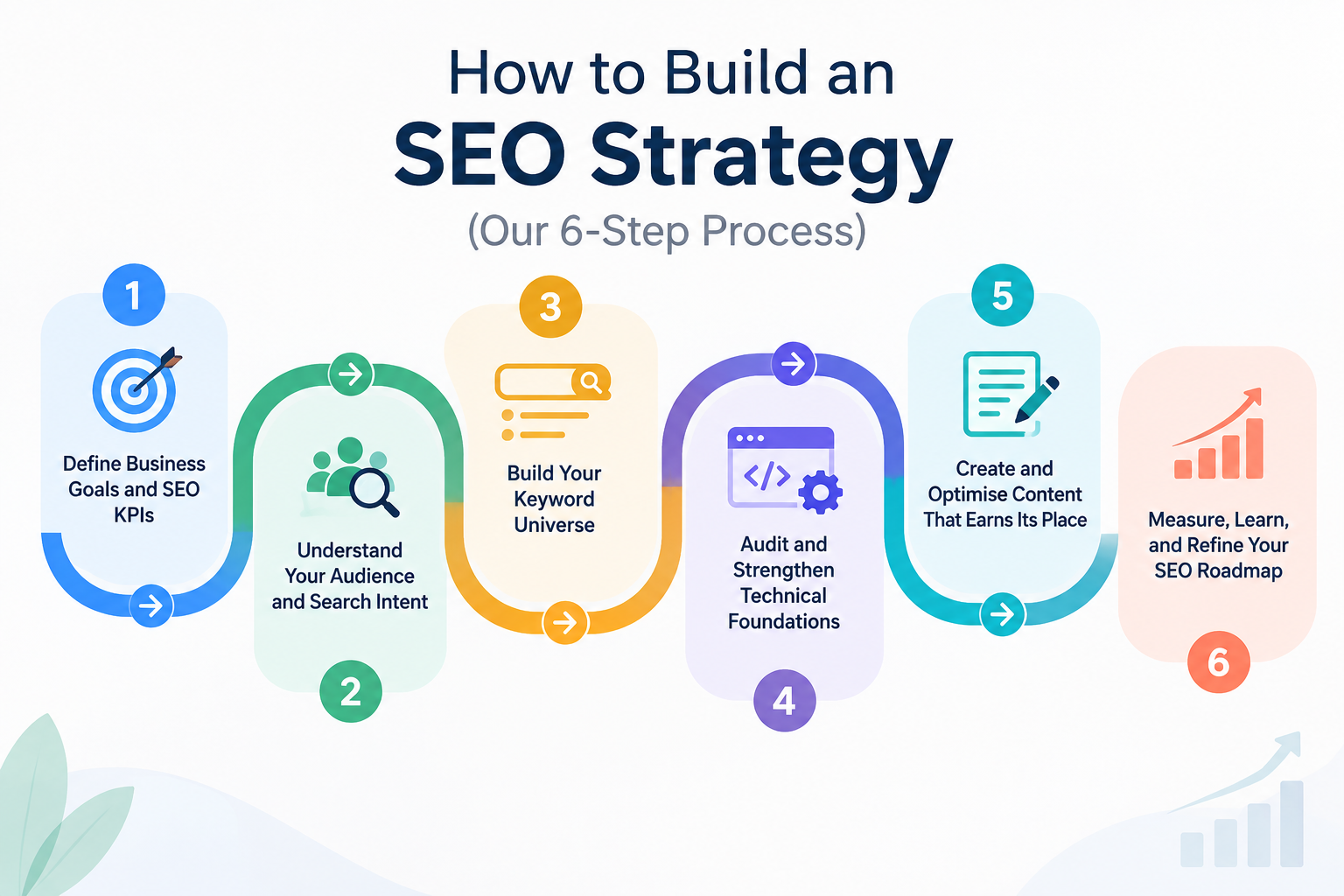
A strong seo strategy turns scattered SEO tasks into a focused plan for attracting qualified organic visitors and supporting measurable business goals. This six-step framework helps marketing teams move from priorities and audience research to execution, reporting, and continual improvement.
What Is an SEO Strategy?
An seo strategy is a documented approach for improving a website’s visibility in organic search. It brings together audience research, keyword targeting, technical health, content, internal linking, authority building, and measurement instead of treating each activity as an isolated task.
A useful seo plan answers three practical questions: which audiences matter most, which searches can lead them to the business, and which outcomes will show that organic search is contributing value.
Why a Checklist Is Not Enough
Publishing articles, changing title tags, and fixing errors can all be worthwhile. But without priorities, ownership, and a way to measure business impact, those tasks do not add up to an effective seo strategy.
Use your seo roadmap to decide what happens first. A crawl or indexing issue that prevents key service pages from appearing in search is usually more urgent than a cosmetic metadata update. Likewise, a commercial page with clear conversion potential often deserves attention before a low-value informational topic.
Step 1: Define Business Goals and SEO KPIs
Start with the commercial objective, then identify how organic search can contribute. A goal such as “increase qualified enquiries for SEO services in the UAE” is more useful than “get more traffic” because it directs keyword selection, page priorities, and reporting.
- Set one primary business outcome, such as qualified leads, sales, bookings, or pipeline value.
- Record a baseline for organic sessions, conversions, conversion rate, visibility, and priority-page rankings.
- Choose a small set of KPIs that show both leading progress and business contribution.
Common mistakes
- Treating a single ranking position as the only measure of success.
- Tracking traffic without tracking the actions visitors take after arriving.
- Selecting too many KPIs, which makes reports difficult to interpret.
Step 2: Understand Your Audience and Search Intent
Search intent explains the job a user wants a result to do. Before creating or optimizing a page, review the current results page and ask what format Google is rewarding: a guide, a product or service page, a comparison, a local result, or a direct answer.
- Informational intent: users want definitions, advice, instructions, or research.
- Commercial investigation: users are comparing providers, tools, or approaches.
- Transactional intent: users are ready to enquire, purchase, book, or sign up.
- Navigational intent: users are trying to reach a known brand or page.
For UAE businesses, also consider language preferences, location modifiers, service-area relevance, and mobile experience. Intent should shape the page type before it shapes the copy.
Step 3: Build Your Keyword Universe
Keyword research turns audience needs into targets for your seo strategy. Begin with core commercial topics, then expand into related questions, long-tail phrases, comparison terms, problem-led searches, and local variations where they are genuinely relevant.
Group keywords by topic and intent rather than producing separate pages for every variation. One strong page can often cover several closely related terms when it answers the same underlying question.
Prioritise for impact
- Relevance: Does the search closely match a product, service, or high-value audience need?
- Intent: Is the visitor likely to need education, comparison, or a direct conversion path?
- Competition: Can the site credibly compete with the pages currently ranking?
- Value: What would a qualified visit or conversion from this topic mean to the business?
Use these criteria to turn research into an seo roadmap with clear priorities, page types, owners, and deadlines.
Step 4: Audit and Strengthen Technical Foundations
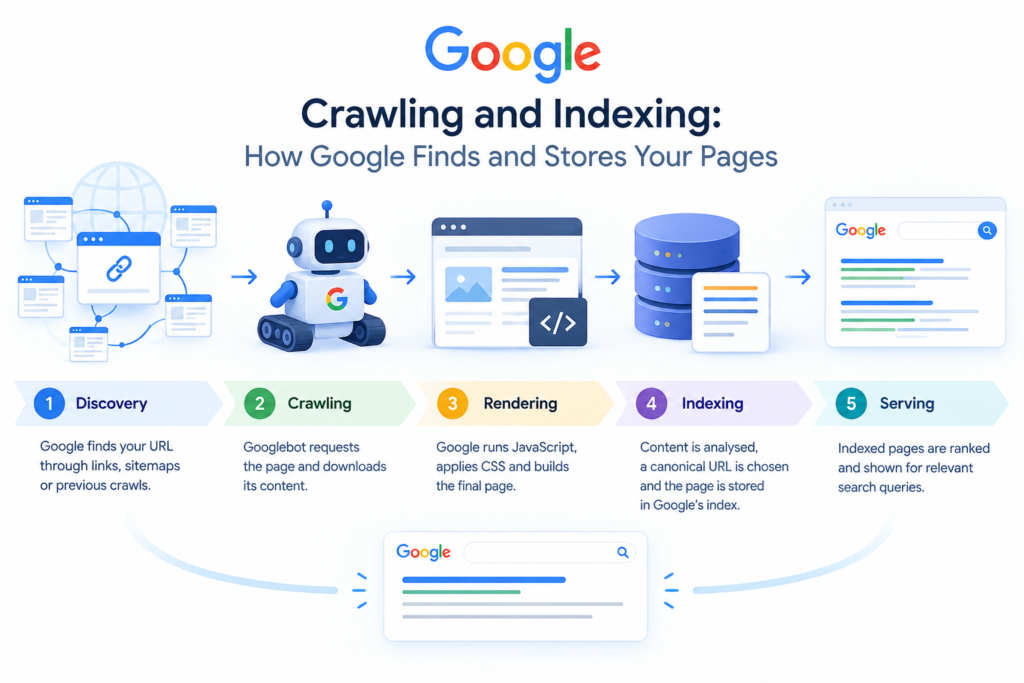
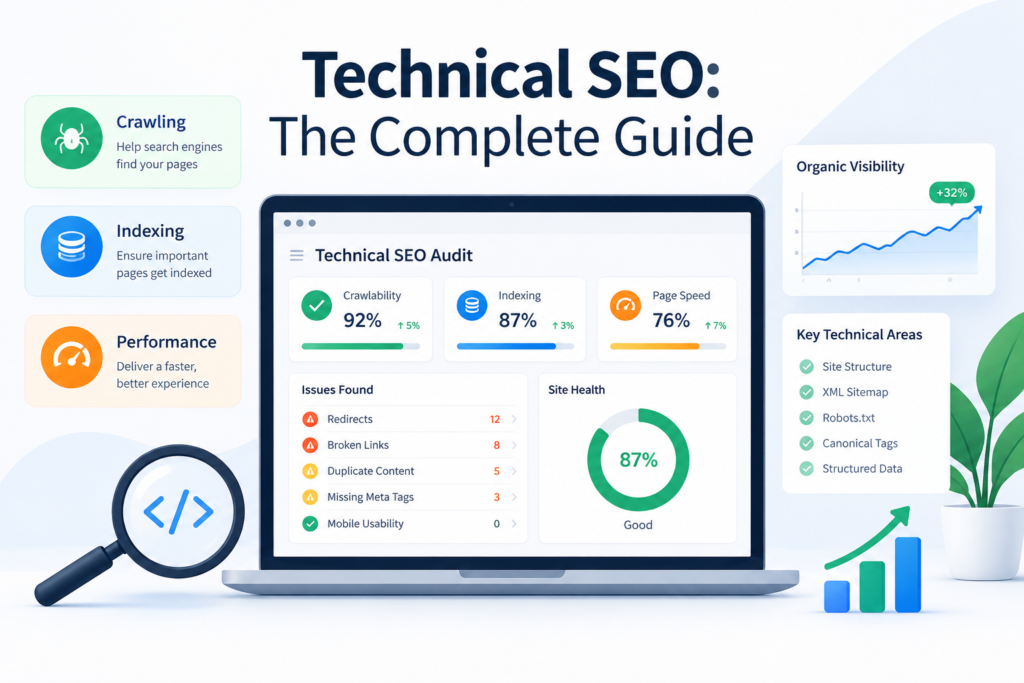
Technical SEO helps search engines discover, crawl, render, and index the pages you want people to find. It is not a substitute for useful content, but it can prevent good content from performing when fundamental issues are left unresolved.
- Check crawlability and indexability of important commercial and informational pages.
- Review robots directives, XML sitemaps, canonical tags, redirects, and status codes.
- Identify duplicate, thin, outdated, and orphan pages.
- Improve mobile usability, page experience, and logical site architecture.
- Use structured data only when it accurately represents visible page content.
Fix critical issues first. A sensible seo process distinguishes between blockers, high-impact improvements, and lower-priority enhancements so teams do not spend weeks on changes with little commercial effect.
Step 5: Create and Optimise Content That Earns Its Place
Each important page should have a clear purpose. For a guide, the purpose may be to answer a complete question better than competing resources. For a service page, it may be to help a potential buyer understand the offer, assess fit, and take the next step.
Build content around topic clusters. A cornerstone page can address the central subject, while supporting articles answer narrower questions and link back using natural, useful anchor text. This creates a more coherent seo plan than publishing unrelated blog posts.
On-page essentials
- Use a clear title tag, one descriptive H1, and headings that help users scan the page.
- Cover the questions and decision factors a searcher is likely to have.
- Use the primary term and close variations naturally; do not force repetition.
- Add contextual internal links to related services, resources, and next-step pages.
- Write concise calls to action that match the visitor’s stage of intent.
Step 6: Measure, Learn, and Refine Your SEO Roadmap
A mature seo strategy is iterative. Review performance regularly, compare it with the baseline, and use the findings to make better decisions about the next quarter’s work.
- Monitor organic conversions and conversion quality alongside traffic.
- Track impressions, clicks, click-through rate, and query trends in Search Console.
- Review priority-page rankings and visibility rather than chasing every keyword.
- Assess whether underperforming pages should be improved, consolidated, redirected, or retired.
- Refresh pages when user needs, service offerings, or the search results have materially changed.
The point is not to react to every ranking movement. A good seo process looks for sustained patterns, tests reasonable improvements, and records what was changed so the team can learn from the result.
Turn the Process Into a Repeatable System
Document the way your team works: KPI definitions, keyword-prioritisation criteria, technical audit checks, content brief requirements, editorial review standards, and reporting cadence. This prevents valuable knowledge from remaining in individual spreadsheets or inboxes.
Your seo plan should be durable enough to guide day-to-day work and flexible enough to respond to new products, competitive shifts, and changes in audience behaviour. That balance turns SEO from a collection of requests into a managed growth channel.
FAQs
1. What is an SEO strategy?
An SEO strategy is a structured plan for improving organic visibility so a website can attract qualified visitors and support defined business goals. It typically includes audience research, keyword targeting, technical SEO, content, internal linking, authority building, and measurement.
2. What are the main steps in an SEO process?
A practical SEO process includes defining goals and KPIs, understanding audience intent, researching and prioritising keywords, fixing technical barriers, creating or improving pages, and measuring results to refine the roadmap.
3. How is an SEO plan different from an SEO roadmap?
An SEO plan sets out the objectives, audiences, topics, and activities. An SEO roadmap translates that plan into a timed sequence of work, with priorities, owners, dependencies, and expected outcomes.
4. How long does SEO take to show results?
Timing depends on the website’s current condition, competition, content quality, technical issues, and resources. Some technical improvements can be reflected sooner, while building visibility for competitive topics usually requires sustained work over several months.
5. Should SEO focus on traffic or conversions?
Use both, but prioritise qualified conversions. Traffic is useful when it reaches the right audience and contributes to enquiries, sales, sign-ups, or other outcomes that matter to the business.