Ask a handful of business owners in Dubai what their marketing looks like and the answers sound familiar: a few Instagram posts a week, a Google Ads account nobody has opened in months, and a website that hasn’t changed since launch. Each of those is a piece of digital marketing. None of them, on its own, is a strategy.
This guide explains what is digital marketing in practical terms, breaks down the channels that matter, and shows how to connect them into a plan you can actually measure. It’s written for business owners and marketing teams in the UAE who want to spend less time guessing and more time on what works.
What Is Digital Marketing?
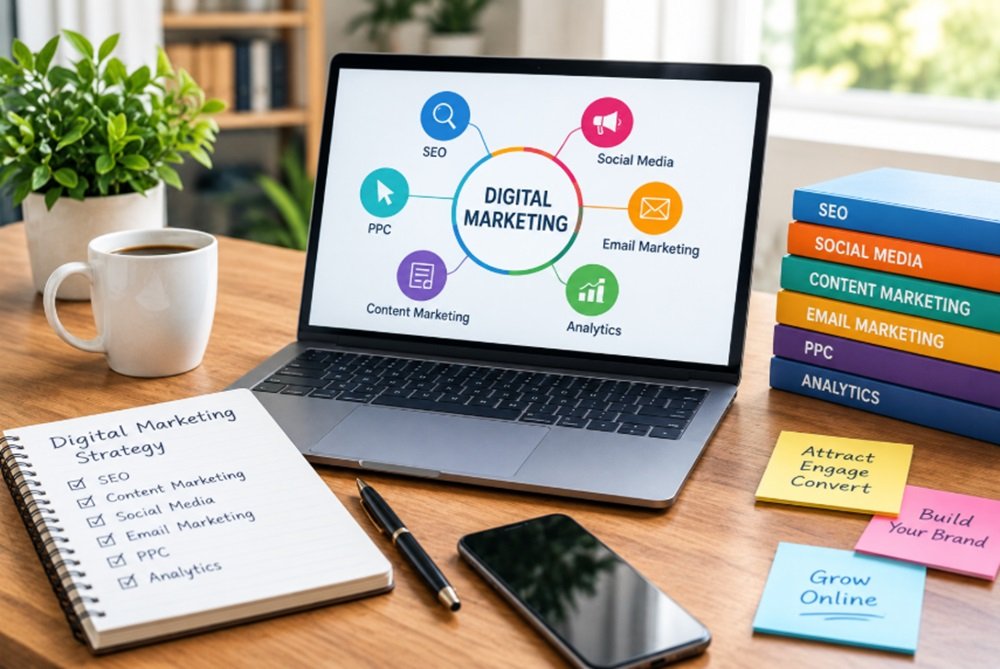
Digital marketing is the promotion of a business, product or service through internet-connected channels (search engines, websites, social platforms, email, messaging apps and online ads) to reach potential customers and turn them into paying ones.
The screen isn’t the real difference from older forms of promotion. The feedback loop is. Nearly every online interaction leaves a record: which ad someone clicked, how long they stayed on a page, whether they called, messaged or filled in a form. That record lets you fix a weak campaign in days instead of waiting for the next quarterly sales report.
What It Means in Plain Terms
Strip away the jargon and the digital marketing meaning comes down to three jobs:
- Get found by people who are already searching for what you sell (search engines, Google Maps, marketplaces).
- Get noticed by people who aren’t searching yet but fit your customer profile (social media, video, display ads).
- Stay in touch with people who have shown interest but haven’t bought (email, WhatsApp, retargeting).
Every channel in this guide does at least one of these jobs. When a business says online marketing “doesn’t work” for them, the cause is usually that they’ve put everything into one job and ignored the other two.
How It Compares With Traditional Marketing
| Factor | Traditional (billboards, print, radio) | Digital channels |
| Targeting | Broad: by location or publication | Narrow: by search intent, interests, behaviour, job title, location |
| Measurement | Estimates (circulation, footfall) | Clicks, leads and sales tracked per campaign |
| Minimum budget | Usually high | Can start small and scale what works |
| Making changes | Weeks (reprint, rebook) | Hours |
| Lifespan | Ends when the booking ends | SEO and content can keep bringing traffic for years |
Traditional media still earns its place. A billboard on Sheikh Zayed Road builds awareness in a way a banner ad can’t. The problem is proving what it returned. Most UAE businesses now run both, and rely on online channels for the part of the plan that has to show a measurable return.
Why Online Marketing Matters for UAE Businesses
The UAE is one of the most connected markets anywhere. DataReportal’s Digital 2026 report puts internet users at 11.3 million at the end of 2025, or 99% of the population, with 23 million active mobile connections: roughly two for every resident.
High connectivity also means high competition, so digital marketing here has to account for a few local realities:
- Mobile comes first. Most searching, social browsing and purchase research happens on a phone. A landing page that loads slowly or is awkward on mobile wastes ad spend, however good the ad is.
- Your audience is bilingual. Arabic and English searches often return different results and face different levels of competition. An English-only keyword plan can miss a real share of demand.
- Platform choice depends on who you sell to. DataReportal reports 10 million LinkedIn members in the UAE, which makes B2B targeting more practical here than in many markets. Instagram, TikTok and Snapchat tend to suit consumer brands.
- Conversations happen on WhatsApp. Many customers would rather send a message than fill in a form. Click-to-WhatsApp ads and a visible WhatsApp button can remove friction from the enquiry process.
- Regulation is catching up. The UAE’s Personal Data Protection Law (Federal Decree-Law No. 45 of 2021) affects how you collect and use customer data, and the UAE Media Council requires people who publish advertising content on social media, including many influencers, to hold an Advertiser Permit. Check the current requirements before launching a campaign.
The Main Types of Digital Marketing
There is no official list. Some guides count five channels, others fifteen. The types of digital marketing below are the ones most businesses actually use, with a note on what each is good for and where it falls short.
1. Search Engine Optimisation (SEO)
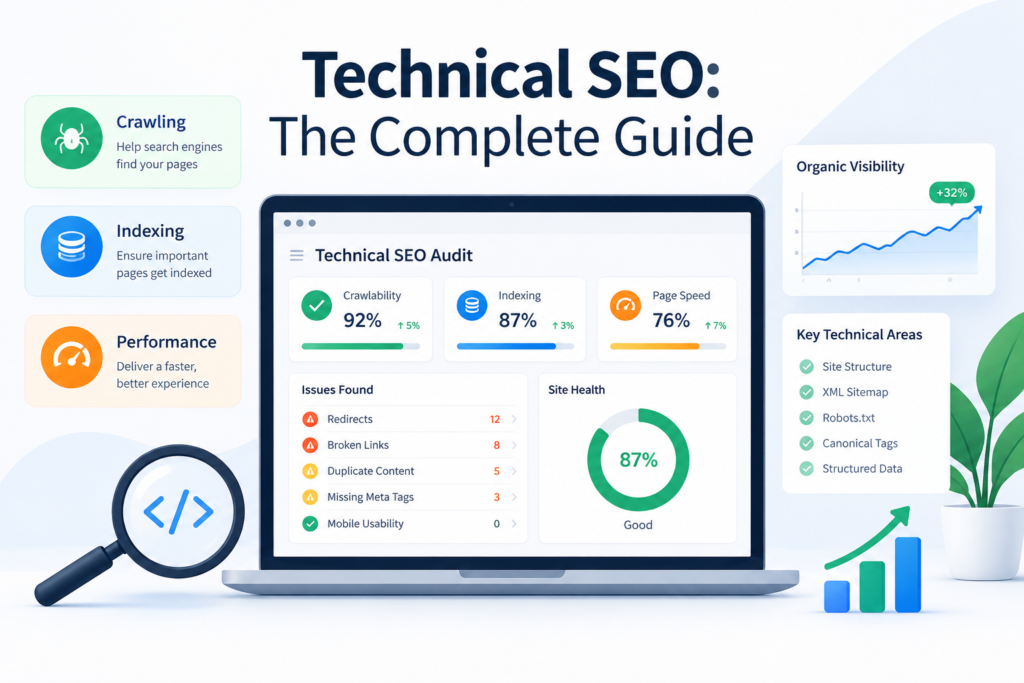
SEO is the work of making your website rank in Google’s unpaid results for the searches your customers make. It covers three areas: technical health (site speed, mobile usability, crawlability), content that answers real questions, and authority signals such as links from reputable sites.
For businesses that serve a specific area, local SEO matters just as much. A complete Google Business Profile, consistent contact details across directories and genuine customer reviews help you appear in map results for searches like “physiotherapy clinic JLT”.
- Best for: steady, compounding traffic that doesn’t stop when the budget does.
- Watch out for: timelines. Google’s own guidance says SEO work typically takes four months to a year before the benefits show.
2. Pay-Per-Click Advertising (PPC)
PPC advertising, most often through Google Ads, puts your business at the top of search results for chosen keywords, and you pay each time someone clicks. Together with SEO, it’s usually grouped under search engine marketing (SEM).
Its biggest advantage is speed: a well-built campaign can start generating enquiries within days. Its biggest risk is waste. Without negative keywords, sensible location targeting and conversion tracking, budget drains into irrelevant clicks, such as a “free consultation” ad showing to people searching for free courses.
- Best for: capturing high-intent demand immediately, and testing which offers convert before investing in SEO.
- Watch out for: results stop the moment spending stops.
3. Social Media Marketing
This covers both organic activity (posting, community management, replying to comments and DMs) and paid advertising on platforms such as Instagram, Facebook, TikTok, LinkedIn, Snapchat and X.
Organic reach on most platforms is limited, so organic social works best for building trust and giving people something to check when they’re vetting you. Paid social is where the targeting power is: you can reach people by location, interests, job title or past interaction with your brand.
- Best for: awareness, creating demand, retargeting, and B2B targeting on LinkedIn.
- Watch out for: chasing followers and likes instead of enquiries.
4. Content Marketing
Content marketing means creating useful material (articles, guides, videos, case studies, calculators) that answers the questions buyers ask before they’re ready to speak to sales. It’s less a separate channel than the fuel for the others: SEO needs pages to rank, social needs something to share, and email needs something worth opening.
A good test for any piece of content: would a potential customer save it or forward it to a colleague? If not, it’s probably filler.
5. Email Marketing and Automation
Email is one of the few channels you own outright. No algorithm decides whether your subscribers see your message. Automated sequences, such as a welcome series, an abandoned-cart reminder or a follow-up after a quote, handle much of the nurturing without manual effort.
Build your list with clear consent and an easy way to unsubscribe. It’s good practice, and it keeps you on the right side of data protection rules.
6. Influencer and Affiliate Marketing
Influencer marketing borrows the trust a creator has built with their audience. For many UAE brands, particularly in food, beauty, fitness and property, creators with a smaller but focused local following can deliver better value than big names. Remember the Advertiser Permit requirement mentioned above.
Affiliate marketing pays partners a commission only when they deliver a sale or lead, which makes it a lower-risk option for e-commerce brands.
7. Video, Display and Programmatic Advertising
YouTube ads, banner ads on news and lifestyle sites, and programmatic buying (automated ad purchasing across many sites) are mainly awareness and retargeting tools. Retargeting, which shows ads to people who have already visited your site, is usually where display earns its keep, because it reaches people who already know your name.
8. Conversion Rate Optimisation (CRO) and Analytics
This is the layer that makes the other seven work. Tools such as Google Analytics 4 and Google Tag Manager show where visitors come from and where they drop off. CRO uses that information to improve landing pages, forms and calls to action so more visitors become leads.
Doubling your conversion rate has the same effect on leads as doubling your traffic, and it’s often the cheaper of the two to achieve.
Channel Comparison at a Glance
| Channel | Main job | Typical time to results | How you pay |
| SEO | Get found | Months | Time, content, specialist fees |
| PPC | Get found | Days | Per click |
| Paid social | Get noticed | Days to weeks | Per impression or click |
| Organic social | Build trust | Months | Time and content production |
| Content marketing | Feeds every channel | Months | Time and production |
| Email and automation | Stay in touch | Weeks | Software plus time |
| Influencer / affiliate | Get noticed | Weeks | Per post or per sale |
| Video and display | Get noticed, retarget | Days | Per impression or view |
| CRO and analytics | Improve all of the above | Weeks | Tools plus time |
How the Channels Work Together
Real customers rarely follow a straight line. Take someone in Abu Dhabi planning a kitchen renovation:
- They see a short before-and-after video from a fit-out company on Instagram and keep scrolling.
- Two weeks later, they search “kitchen renovation Abu Dhabi” and recognise the company’s name in the results.
- They read a pricing guide on the company’s website but don’t enquire.
- A retargeting ad reminds them a few days later. They tap the WhatsApp button and book a site visit.
- After the visit, an automated email sends a project portfolio and a quote summary.
Five channels contributed to one sale. If the company judges each channel only on the last click, it will credit WhatsApp and the retargeting ad, decide Instagram and content are a waste of money, and cut the very channels that started the journey. That’s why a sound digital marketing plan looks at the whole path, not just the final touchpoint.
How to Build Your Strategy in 7 Steps
A workable digital marketing plan doesn’t need a 60-page deck. It needs clear answers to seven questions.
- Start with a business goal. “Get 40 qualified leads a month for our corporate cleaning service” is a goal. “Increase brand awareness” is not, because you can’t tell when you’ve achieved it.
- Define who you’re trying to reach. Which emirate? Which language? Who makes the buying decision: the end user, a procurement team, a parent? The answers decide your channels.
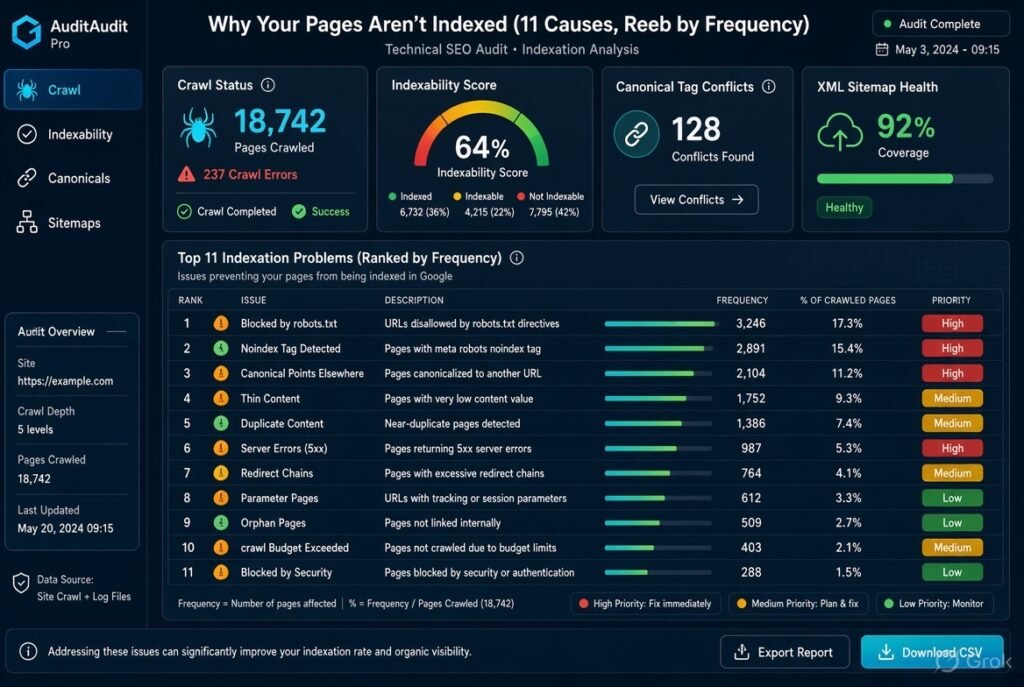
- Audit what you already have. Check your website’s mobile speed, your Google Business Profile, your reviews, and whether conversion tracking actually works. Fixing these basics often achieves more than any new campaign.
- Choose two or three channels to start. A new B2B service firm might pair LinkedIn with Google Ads and a few strong service pages. A restaurant might focus on local SEO, Instagram and delivery-app listings. Add channels once the first ones are working.
- Set up tracking before you spend. GA4, conversion events, call tracking and UTM tags on every campaign link. Without these, you’re running on opinion.
- Create the campaigns and content. Match each message to the buyer’s stage: helpful, problem-focused content for early browsers; proof, reviews and offers for people ready to buy.
- Review monthly and reallocate. Move budget toward what produces enquiries at an acceptable cost, and give slower channels like SEO a fair timeline before judging them.
Measuring Results: The KPIs That Matter
Likes, impressions and follower counts are easy to report and easy to misread. The numbers that tell you whether digital marketing is paying off connect activity to revenue:
| Metric | What it tells you |
| Cost per lead (CPL) | How much you pay for each enquiry |
| Lead-to-customer rate | Whether your leads are the right quality |
| Customer acquisition cost (CAC) | Total marketing cost to win one customer |
| Return on ad spend (ROAS) | Revenue generated for each dirham spent on ads |
| Conversion rate | Share of visitors who take the action you want |
| Customer lifetime value (LTV) | What a customer is worth over the whole relationship |
The most useful comparison is CAC against LTV. If a customer is worth AED 5,000 to you over two years, paying AED 600 to win one may be excellent value, even if the cost per click looks high.
Common Mistakes to Avoid
- Trying to be everywhere at once. A thin presence on six platforms usually underperforms a strong presence on two.
- Sending ad traffic to the homepage. Every campaign deserves a landing page that matches the ad’s promise.
- Skipping tracking. Without it, budget decisions become guesswork.
- Ignoring Arabic, or translating it word for word. Arabic ad copy should be written for Arabic readers, not converted from English.
- Judging SEO after a month. Organic search builds slowly, then rewards patience.
- Treating your agency as a black box. You should own your ad accounts, analytics and website, and get reports you can understand.
In-House, Freelancer or Agency?
| Option | Works well when | Trade-offs |
| In-house team | You have steady, high-volume work and need deep product knowledge | Expensive to hire across SEO, paid media, content and analytics |
| Freelancers | You need specific, well-defined tasks done | You handle the coordination and strategy yourself |
| Agency | You need several specialisms at once without full-time hires | Works best with clear goals and transparent reporting |
Whichever route you choose, ask the same questions: Who will actually work on my account? What will you report, and how often? Do I own the accounts and the data? How will you measure success against my business goals?
Where to Start
Digital marketing rewards consistency far more than cleverness. Pick a clear goal, fix your tracking and website basics, commit to a small number of channels, and review the numbers every month. Once you understand the types of digital marketing and the job each one does, decisions about budget and priorities become much simpler.
If you’d like an outside view of where your current setup is losing leads, the team at One Conversion can review your website, campaigns and tracking and recommend where to focus first. Book a free marketing revidigital marketingew.
FAQs
1. Is digital marketing the same as online marketing?
Mostly, yes, and the two terms are used interchangeably. Strictly speaking, “digital” also covers channels that aren’t on the open web, such as SMS, in-app ads and digital screens, but for most businesses the distinction doesn’t change anything in practice.
2. What is the difference between SEO and SEM?
SEO earns unpaid rankings in search results over time. SEM usually refers to paid search ads such as Google Ads, although some people use it to cover both paid and organic search. Most businesses do best running the two together: ads for immediate leads, SEO for long-term traffic.
3. How much should a small business in the UAE spend on online marketing?
There’s no fixed figure. Budgets depend on how competitive your industry is, how many channels you use and whether you manage campaigns in-house. When comparing quotes, keep ad spend and management fees separate, and start with a budget you can sustain for at least three months so you have enough data to judge results.
4. How long does it take to see results?
Paid search and paid social can produce leads within days of launch. SEO and content usually take several months, and Google’s own guidance puts typical SEO timelines at four months to a year. Email and conversion rate improvements tend to show results within weeks.
5. Which channel should a small business start with?
Start with the channel closest to buying intent. For most local businesses, that means a well-optimised Google Business Profile, a fast mobile-friendly website and a small, tightly targeted Google Ads campaign. Add social media and email once enquiries are coming in reliably.